
Container Flatbed Trailer Flat Wagon
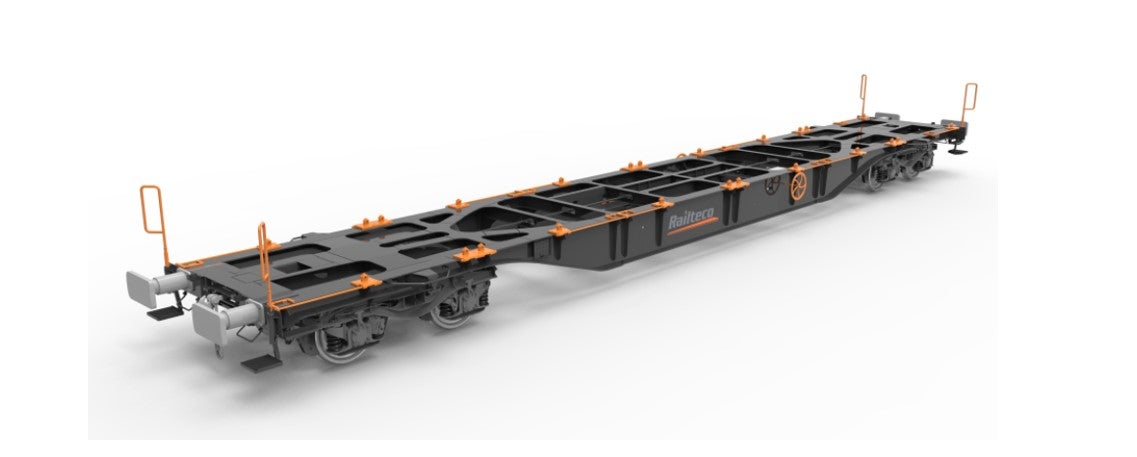
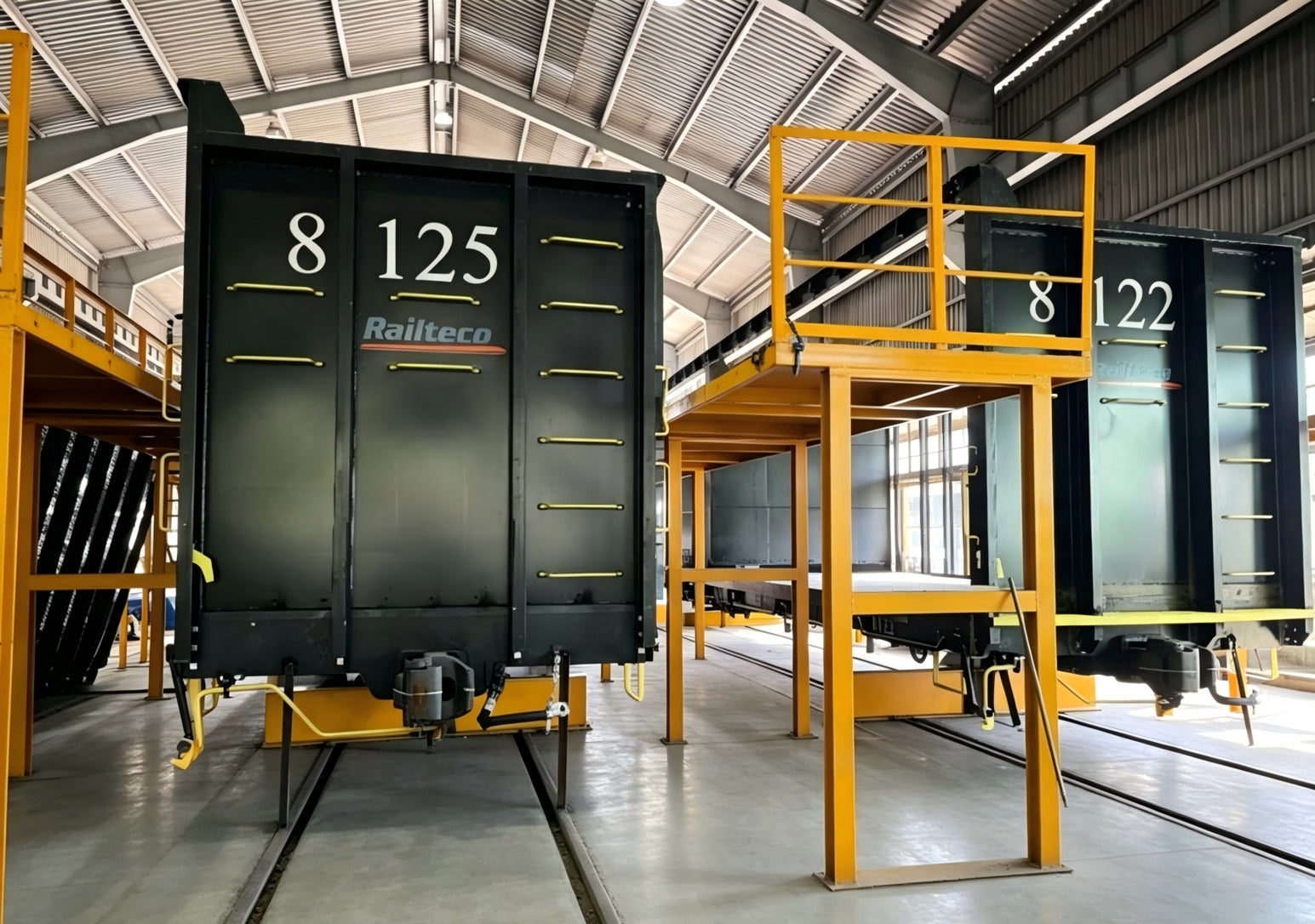
A railway container flat wagon (also called a flatbed trailer, or simply a flatcar) is a type of railroad car designed specifically to carry standard intermodal shipping containers. Unlike a traditional flatcar, it features a low deck, often with a depressed centre section (the ‘well’), to allow containers to be stacked double-stack, maximizing capacity and stability.
It is suitable for carrying containers and swap bodies of various lengths (20’, 30’, 40’) classified in UIC592.
Key design features
- Low Deck Profile (The ‘well’): The most critical feature. The deck is lowered between the bogies (wheel sets) to create a well. This drastically reduces the overall height of a loaded double-stack train, allowing it to clear tunnels, bridges, and overhead electrical wires.
- Twist Locks: These are the standardized locking mechanisms that secure the containers to the wagon. They are located at precise positions on the deck to match the corner castings of ISO containers (20ft, 40ft, 45ft, etc.). Operators twist these locks to firmly grip the container.
Main parameters
- Tare weight: ≤20t
- Payload: 70t
- Loading height: 1155mm
- Axle load: ≤22.5t
- Track gauge: 1435mm (can customise)
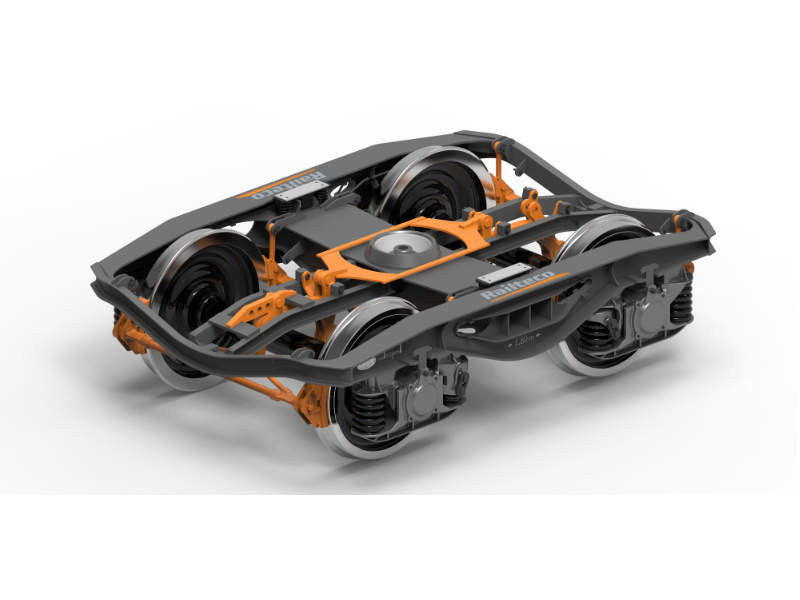
- Bogie type: Y25Lsd1-K
- Max. Operating Speed: 120km/h