

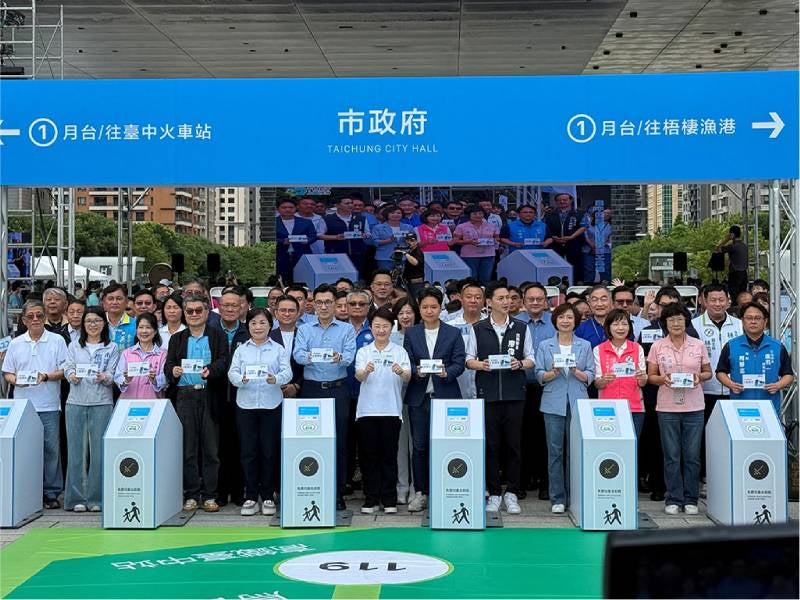
The Taichung Metro Blue Line is a mass rapid transit (MRT) project currently under construction in Taichung, Taiwan.
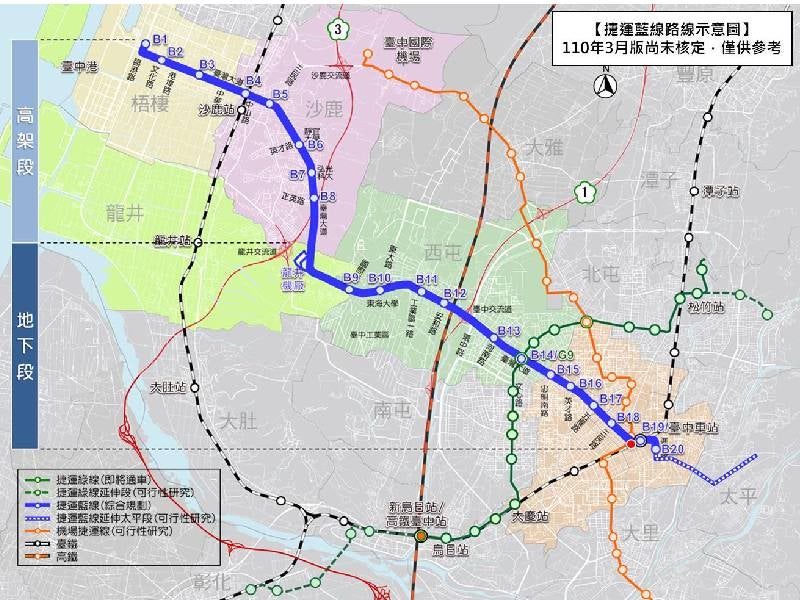
As the city’s fifth MRT route and second major metro line, the Blue Line will run 24.8km (15.4 miles) from Taichung Port in the west to the new Jianguo Market in the east, connecting key commercial, residential and transport hubs throughout the city.
Recommended White Papers
Recommended Buyers Guides
With an estimated investment of T$160.2bn ($5.3bn), the project is a central component of the Greater Taichung MRT Plan, aiming to improve connectivity, alleviate traffic congestion and promote sustainable urban development.
The project is being undertaken by the Department of Rapid Transit Systems and the city government. Construction began in June 2025, with operations targeted for 2034.
Taichung Metro Blue Line route and station details
The Blue Line will include a 10.3km (6.4 miles) above-ground section and 14.48km underground section. It is designed to accommodate up to 12,220 passengers per hour in one direction.
Traversing eight districts and 53 neighbourhoods, the Blue Line will link key locations such as Taichung Port, Shalu Train Station, Taichung City Government Hall and Taichung Train Station, ultimately terminating at the Taiwan Sugar Corporation Biological Park.
The line will have 20 stations, of which eight will be elevated and 12 will be underground. The design includes five one-level service stations and a central depot, which will enhance operational efficiency and maintenance flexibility.
The route will navigate a variety of landscapes, including the Qingshui Plain, Dadu Terrace and Taichung Basin. It will also feature significant engineering structures, such as elevated crossings over National Highways No 1 and No 3, as well as the Fazi River.
The line will connect with the existing Green Line and the future Orange Line, enhancing the overall transit network.
Rolling stock
The rolling stock for Blue Line will include fully automated, driverless trains, each comprising three cars and capable of carrying up to 530 passengers.
The trains will feature lightweight aluminium bodies to enhance durability and energy efficiency, and will operate at speeds of up to 80km/h.
Signalling and communications
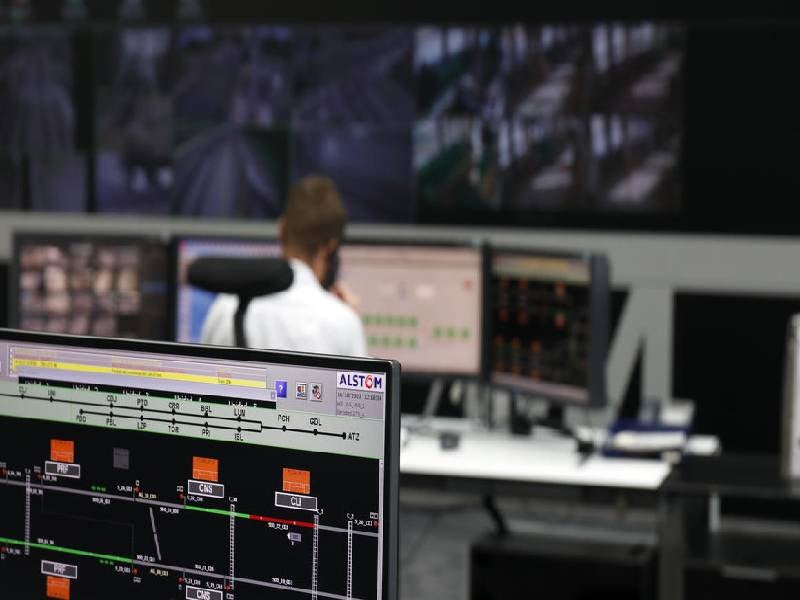
The Taichung Metro Blue Line will be equipped with the Alstom Urbalis communication-based train control driverless signalling system.
The system will allow Blue Line services to run more often and with greater accuracy, including during the busiest periods, resulting in shorter waiting times for passengers.
By enabling headways as short as 90 seconds, the system increases overall network capacity, boosts train frequency and helps to cut journey times.
Contractors involved
MAA Group prepared the initial feasibility study for the Blue Line, providing critical analysis and recommendations that shaped the project’s scope and alignment.
Systra is responsible for the basic design requirements for electrical and mechanical systems, including system-wide operation and maintenance, system integration, and system assurance, supporting the project’s technical and operational coherence.
In January 2025, TUV Rheinland Mobility was appointed to provide independent verification and validation services, ensuring all systems meet international safety and quality standards before commissioning.
In April 2025, Singapore Technologies Engineering through its Urban Solutions business, was awarded a T$1.4bn turnkey contract as consortium leader to deliver overall project management, systems integration and rail electronics, including communications, fare collection, platform screen doors, supervistory control and data acquisition, along with the development of the above-ground train depot.
In the same month, Alstom secured a contract worth €159m ($180.7m) to supply its Urbalis CBTC driverless signalling system. The company had previously supplied the system for the Green Line.
Hyundai Rotem was awarded the rolling stock contract to supply fully automated, three-car trainsets for the Blue Line.
Taiwanese engineering firm CTCI was awarded the contract in June 2025 to deliver electrical and mechanical systems, the main depot and the core power substation, building on its experience from the Green Line and ensuring robust infrastructure for the Blue Line.
Future expansion plan
A planned extension will see the Blue Line expand 4.66km (2.8 miles) eastward to Taiping, adding four underground stations and connecting key locations such as Taiping Sports Ground, Taiping District Office, Tai Shin Hospital and Jianguo Market.
The city government submitted the initial plan to the Ministry of Transportation and Communications in June 2022, with site inspections conducted in May 2024 and a revised plan submitted in November 2024.
