

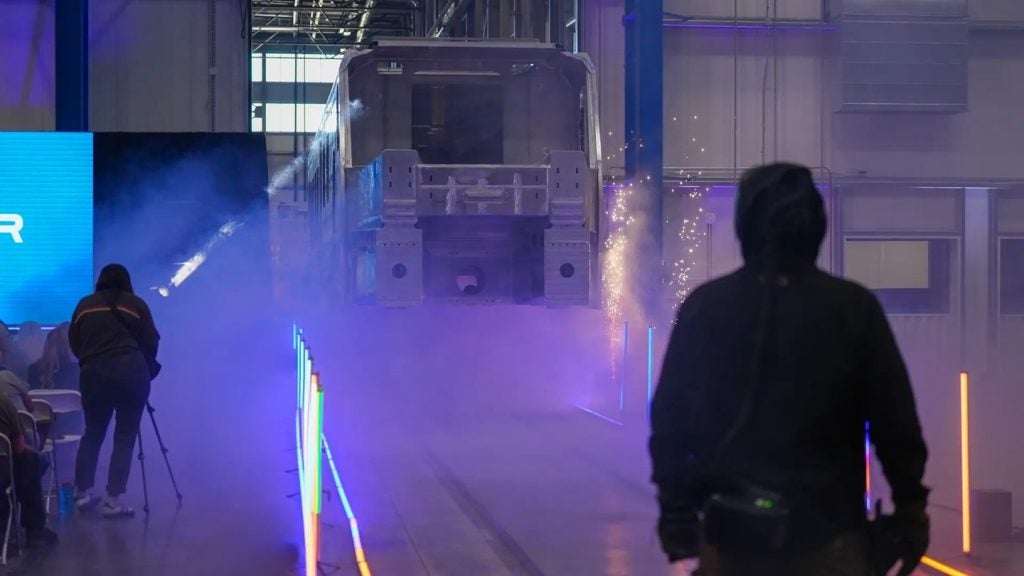
Stadler has commenced welding of aluminium train car bodies at its new facility in Salt Lake City, US.
The 50,000ft² expansion forms part of the company’s ongoing growth within its existing US factory, which manufactures passenger trains for the domestic market.
The facility allows aluminium car bodies to be welded on-site for the first time, rather than transported from Stadler's welding facilities in Europe.
According to the company, this change reduces transit time and increases local manufacturing presence and the proportion of US-made content in Stadler trains to approximately 80%.
The remaining 20% largely comprises supplies sourced from Europe, but the company said it is reviewing its supply chains to identify further opportunities to decrease foreign component usage.
Salt Lake City Mayor Erin Mendenhall said: “This facility is a shining example of what can happen when global expertise meets local ambition.
“With the opening of this new welding hall, train car bodies will be manufactured locally. That means jobs, innovation, and a more sustainable future.”
The facility is projected to create up to 20 new roles for welders and technicians from the local area by the end of 2026.
In support of this expansion, Stadler’s welding specialists from Hungary are currently based at the Salt Lake City site to facilitate knowledge transfer and maintain standards during the initial phase of operations.
Stadler North America CEO Martin Ritter said: “We’re building economic opportunity, stronger supply chains, and a future where American-made trains are synonymous with world-class quality. Today, our welders are proof that it can be done.”
Stadler’s efforts follow requirements set out by the Buy America Act since 2016, under which companies must ensure at least 70% of project value creation is sourced domestically when using US public funds.
Recently, Stadler and HTM Personenvervoer launched the first TINA (Totally Integrated Low Floor) tram in The Hague, marking Stadler's first tram contract in the Netherlands.
The order consists of 62 vehicles, making HTM the largest global customer for the TINA tram.