
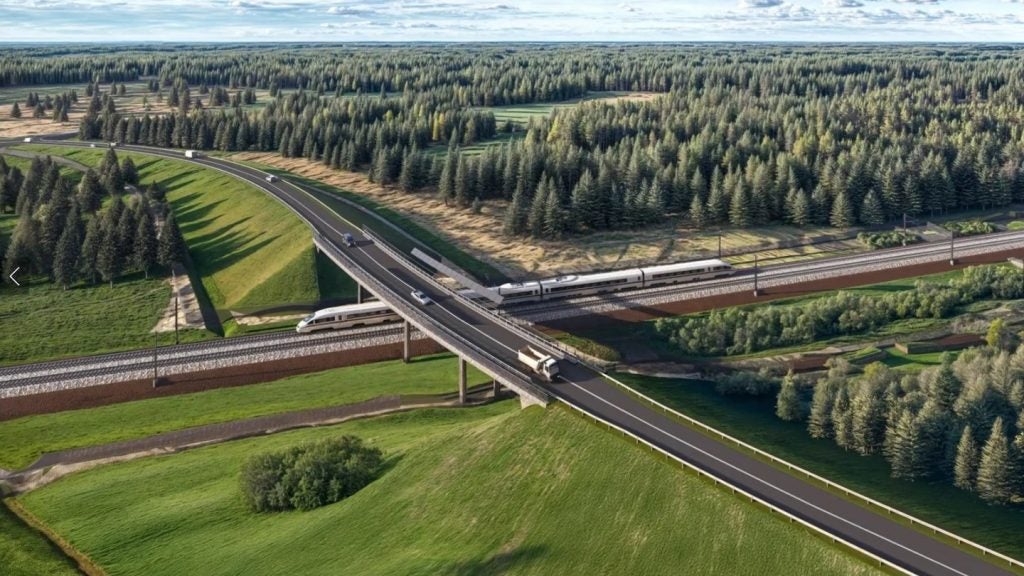
Rail Baltica has formalised its first framework agreements for the consolidated supply of cable protection materials, marking a development in the procurement strategy for the cross-border high-speed railway project spanning the Baltic states.
The agreements, now in force, allocate the provision of multi-ducts to Höhle and cable-ducts to Pipelife Eesti, both based in Estonia.
The cable protection materials supplied under these agreements will be installed along the railway to protect power and communication cables from damage and environmental impact, while also facilitating maintenance and system upgrades.
Rail Baltica is being developed as a safety-critical system integrating track, signalling, power, rolling stock and other components.
Procurement of cable protection materials, which began in 2021, is managed by RB Rail. The work is carried out in partnership with the three national implementing bodies, namely Rail Baltic Estonia, SIA Eiropas Dzelzceļa Līnijas, and LTG Infra.
RB Rail CEO Marko Kivila said: “These agreements mark more than just a procedural milestone – they show that our suppliers are ready to deliver at scale.
“It guarantees that all materials fit into the railway system and meet strict safety and reliability standards.”
The seven-year framework agreements are intended to ensure competitive pricing and transparent supply terms in line with EU funding criteria.
The total projected value of these framework agreements stands at €1.13bn ($1.31bn), representing the maximum estimated contract value for superstructure materials required throughout Rail Baltica’s construction.
Remaining procurement contracts are under review by relevant national authorities.
Further framework agreements will address other key construction materials including rails, sleepers with fastening systems and under sleeper pads, ballast, turnouts, and rail expansion joints.
Additional regional manufacturers are preparing to join the supply chain as part of ongoing efforts to support local industry involvement.
Rail Baltica Estonia CEO Anvar Salomets said: “Estonian companies are highly competitive internationally – these contracts show that our industry has all the prerequisites to contribute to large cross-border projects.
“Each such contract means jobs for Estonian companies, tax revenue for municipalities, and a direct economic impact on the regions through which the high-speed railway passes.”
Recently, TG Infra, part of the LTG Group, signed two construction contracts for the Rail Baltica project, expanding active construction in Lithuania to 114km. The combined contract value is €375.8m ($437m), including VAT.