

Tampere Tramway is an urban light rail project in Tampere, Finland, designed to improve connectivity and public transportation in the city.
Tampereen Raitiotie, a special purpose limited liability company, is responsible for planning, development and maintenance of the Tampere Tramway infrastructure.
Recommended White Papers

Recommended Buyers Guides

The company is owned by the City of Tampere, with the City of Kangasala, the Municipality of Pirkkala and the City of Ylöjärvi as minority shareholders.
The project, being implemented in phases, is run under an alliance model.
The first phase of the tramway was built between 2017 and 2021, covering the sections from Pyynikintori to Hervantajärvi and from the Tays (Kauppi campus) area to Sorin aukio. Passenger service on this phase began in August 2021.
The second phase extended the line from Pyynikintori to Lentavanniemi and was opened in stages. Service on section 2A (Pyynikintori–Santalahti) started in August 2023, followed by section 2B (Santalahti–Lentavanniemi) in January 2025.
In October 2024, the third phase of the project, comprising the Pirkkala–Linnainmaa extension received approval, and construction works began two months later. This phase is expected to be completed in August 2028.
The entire Tampere Tramway project carries a total cost of around €900m ($1.05bn).
Tampere Tramway lines and routes
The Tampere Tram currently operates two lines, with a total length of 24km.
Line 1 stretches from the Kauppi campus area (Tays hospital) to Pyhällönpuisto and serves 20 stops, while Line 3 runs from Hervantajärvi to Sorin aukio square and serves 17 stops.
Four centrally located stops – Sammonaukio, Tulli, Rautatieasema and Koskipuisto – are shared by both lines.
Both lines provide direct access to key residential areas, campuses, workplaces and central services.
Trams operate at a frequency of 7.5 minutes during the daytime.
Tampere Tramway Pirkkala-Linnainmaa extension details
The Tampere Tramway’s Pirkkala–Linnainmaa extension is being developed in two phases.
The first phase will be built from Sorin aukio to Partola and from the Kauppi campus area to Niihama. These sections will operate with temporary terminal stops at Partola and Niihama.
The tram depot in Hervanta will also undergo major modifications to increase capacity and adapt operations to the expanding network.
Phase 2, scheduled for 2028–2032 and subject to state support, will include the development of the sections from Partola to Suuppa and from Niihama to Linnainmaa.
Tram services to Suuppa and Linnainmaa are expected to begin in early 2032.
Tampere Tramway rolling stock details
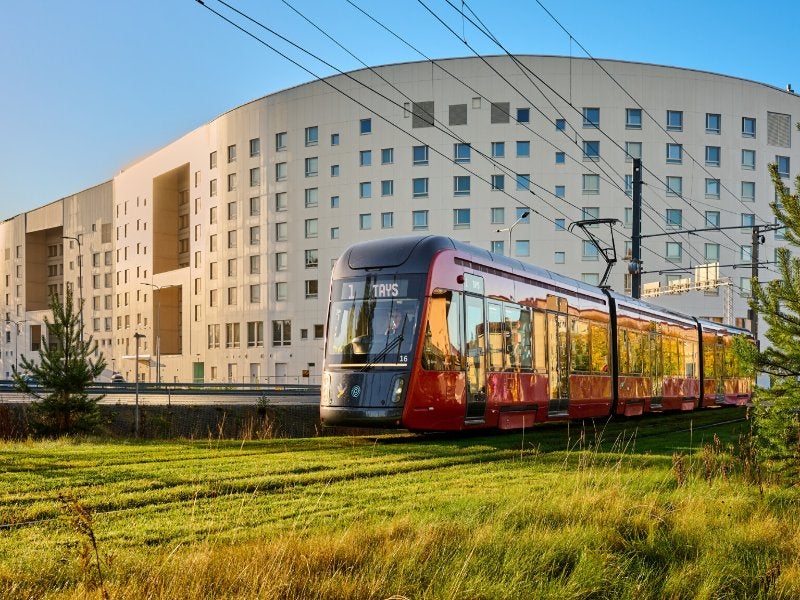
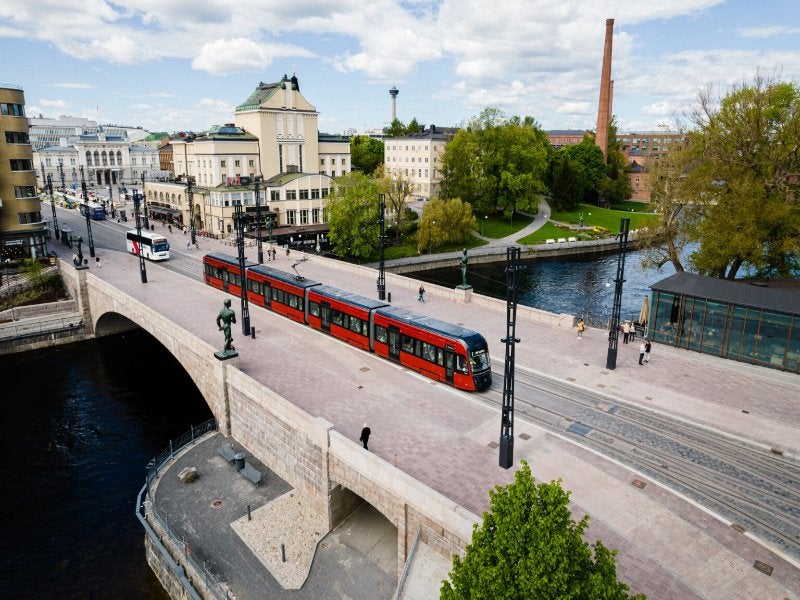
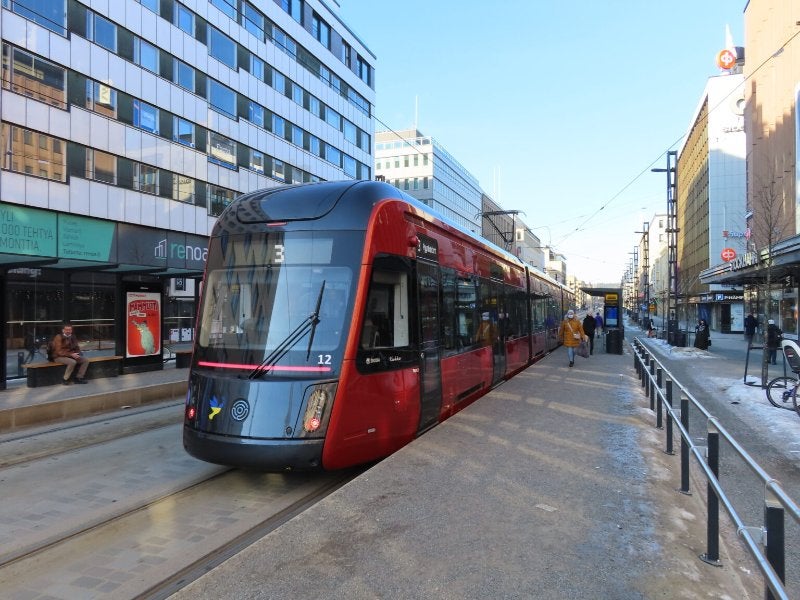
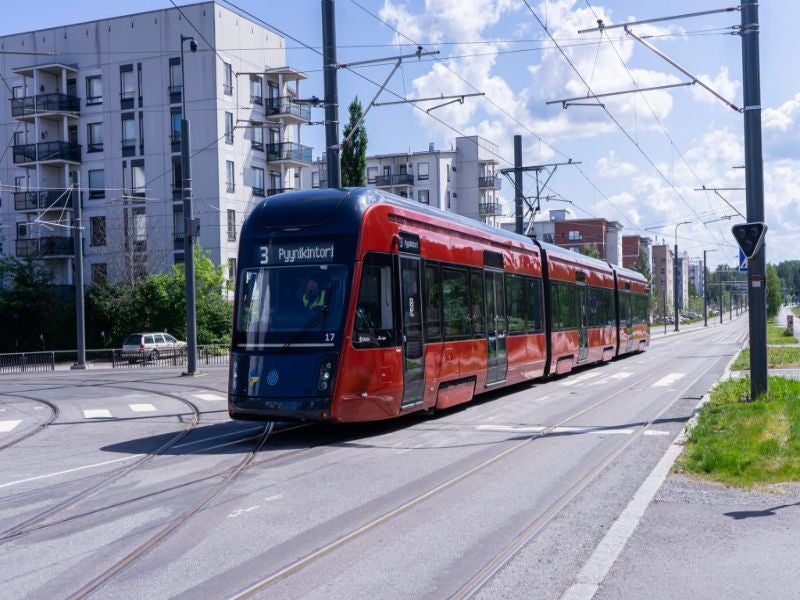
The Tampere Tramway uses ForCity Smart Artic X34 trams, which are 37.3m long, 2.65m wide and 3.6m high.
The bidirectional trams consist of three sections and have a maximum speed of 70km/h and an average speed of 19-22km/h.
Each tram car features 64 fixed and 40 folding seats and has a maximum capacity to carry 264 passengers. It also has a dedicated space for 12 prams or six large wheelchairs/rollators, space for bicycles and two marked seats for guide dogs.
Each tram offers 50.1m² of free floor space and is equipped with four doors at the ends and six doors in the middle sections, ensuring smooth and efficient boarding and alighting for passengers.
Financing details
The Finnish government agreed to fund €71m ($76m) for the project in April 2016, of which €55m ($59m) will be allocated for the first phase and €16m for the second phase.
In June 2025, Nordic Investment Bank (NIB) agreed to provide a €165m ($191m) 30-year uncommitted credit facility to help finance the tramway network extension and support the acquisition of new tram vehicles.
EIB granted €215m ($250m) financing in August 2025 for the extension, which is expected to cost €455m. The funding will be used to support the construction of 13.6km of double-track tram tracks, the expansion of Hervanta tram depot and the purchase of seven new trams and eight extension cars.
The funding follows a €150m ($176.5m) loan to the City of Tampere for the construction of the first 15km-long section of the tramline in September 2017.
Contractors involved
The contract to design and develop the project was awarded to a consortium comprising VR Track, YIT and Pöyry with subpartner Ratatek in 2015.
The consortium was responsible for providing a detailed plan for the design and construction of the tracks, street planning, stops and the depot.
In April 2019, VR-Yhtyma was chosen as the transit operator for Tampere Tramway.
Skoda Transtech received a contract from Tampere City to supply rolling stock for the Tampere tram line. The scope of the contract included the supply of up to 20 ForCity Smart Artic trams and maintenance of the light rail vehicles for a period of ten years.
The contract includes an option for up to 46 trams with a possible extension of vehicle maintenance by up to 30 years. Skoda delivered 20 trams during the period 2020-21.
Tampereen Raitiotie placed a €34m order for five additional ForCity Smart Artic trams in May 2022.
In December 2024, Skoda Group signed a €70m contract for the delivery of seven new trams and eight additional modules. These seven trams are slated to be delivered by mid-2027 and extension modules to be installed by July 2028.
The Tampere Tram Pirkkala–Linnainmaa Alliance is responsible for designing and building Phase 1 of the Pirkkala–Linnainmaa extension, as well as for expanding the Hervanta depot to support the extended network.
The alliance comprises NRC Group Finland, AFRY Finland, Sweco Finland and YIT Infra.
