
Transpennine Route Upgrade, UK
The Transpennine route upgrade is aimed at improving passenger and freight rail services in the northern part of the UK.


You have successfully submitted your enquiry. Someone from our company will respond ASAP
With over 1,400 professionally qualified staff in its rail business, Atkins provides a broad range of consultancy services to the rail sector. From pure signalling design to the programme management of multidisciplinary projects, our experienced teams provide innovative solutions that span every discipline in both the mass transit and heavy rail markets.
Our services are best illustrated through unique but inter-related work streams, including the following.
The rail business offers a range of asset management services which cover the main components of an operational railway (people, processes, assets and information) and six asset types — rail vehicles, track and structures, control and signalling, electrification, telecoms and customer information systems.
Our civil engineers offer expertise in the design, development and management of rail infrastructure systems. With extensive knowledge and understanding of the many elements of operational rail networks and their interfaces, they support clients throughout the full project-lifecycle, which includes feasibility studies, planning, system specification, detailed design, tender preparation and evaluation, construction management, condition surveys, assessments, rehabilitation programmes and maintenance, and whole-life support.


We provide cost-effective design, development and construction-management services in rail electrification for both overhead line and conductor rail systems. From conceptual and detailed design to the installation of new systems and to the renewal or enhancement of existing systems, our experience and skills enable us to offer a comprehensive service embracing all the E&P disciplines.
Our signalling design teams have the capacity to undertake signalling work from outline feasibility studies to scheme design and detailed design. Atkins’ signalling and telecoms specialists provide installation, testing and commissioning on full-scale remodelling programmes, as well as services on smaller technical investigation works. We are in a position to offer clients a true multi-disciplinary service through our collaboration with other disciplines such as civil infrastructure, track, building services and electrification, thus delivering a fully integrated transport solution.
Our rail consultancy services are delivered to all key rail markets. From bespoke permanent-way consultancy to project planning and development, we are involved in projects of varying sizes for a diverse range of clients.
More recently we have been involved in a series of strategic rail consultancy commissions. These differ from the ‘normal’ studies, in that the client has often required an assessment of an entire rail operation from a strategic perspective. In addition to offering traditional railway consultancy services, we also assist non-rail clients who have bespoke rail-related requirements.
Our rail vehicle specialists generate innovative and effective solutions in response to the business needs of vehicle manufacturers, maintainers, owners and operators. From the provision of individual specialist support through to the delivery of full projects, we tailor our expertise to deliver services covering specialist engineering support, strategic services, technical services, certification services, design consultancy and total system support for both rail vehicles and on-track plant vehicles.
Rail property includes stations, depots, lineside buildings and associated developments that involve the railway system. Our strong property/rail infrastructure and passenger modelling expertise is complemented by commercial, architectural, structural and building services from the wider Atkins group. This combination allows us to offer clients a complete solution, be it for a full transport interchange or a metro station.
A number of services we provide cross all work streams. These include design management, programme and planning, possessions planning, project information systems, construction management, and project and programme management services.
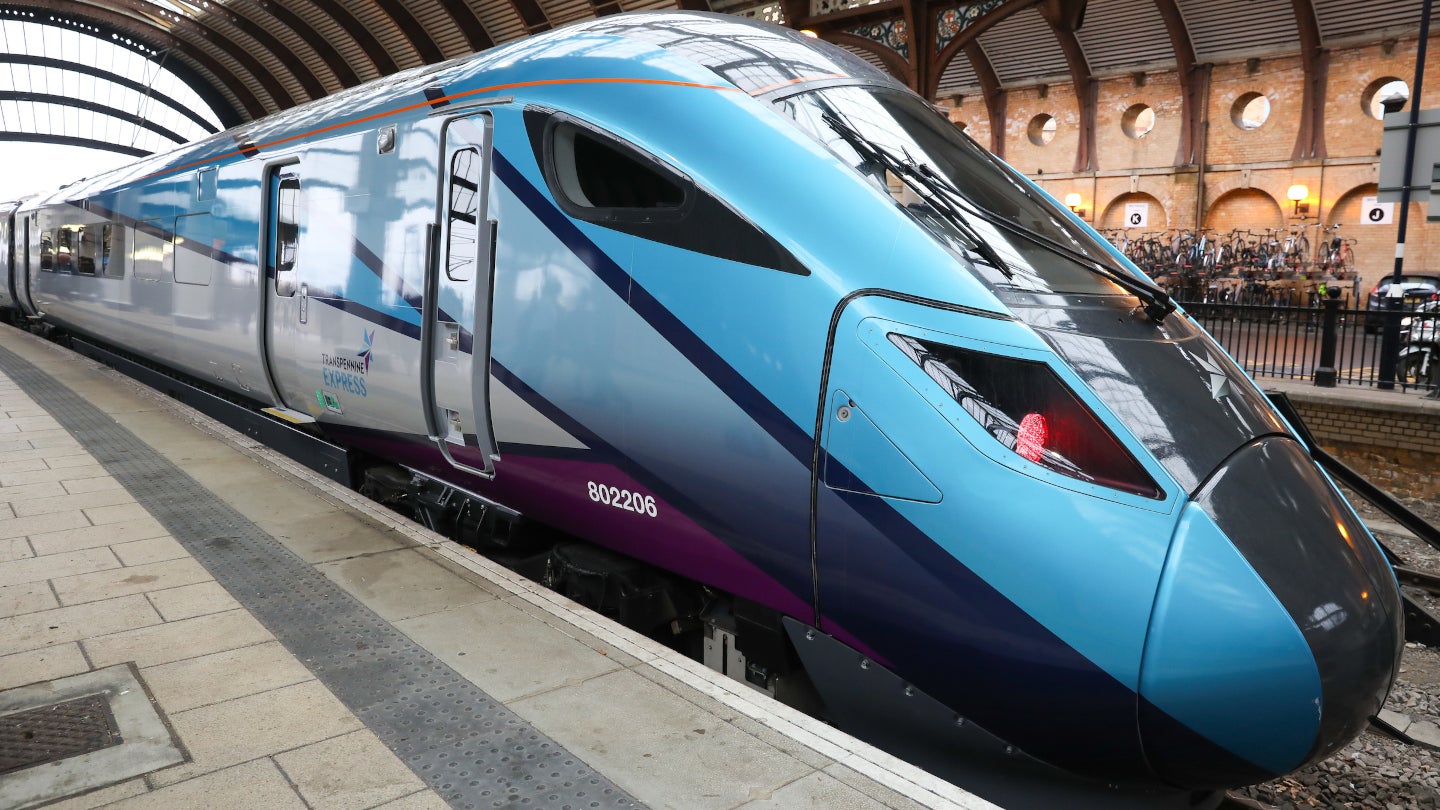
The Transpennine route upgrade is aimed at improving passenger and freight rail services in the northern part of the UK.

The High Speed 1 railway project was implemented in two phases, involving Section 1 and Section 2.

The modernisation of the 399-mile (641.6km) rail route between London and Glasgow and its key divergences to Birmingham, Liverpool and Manchester, was the largest rail project to date in the UK.
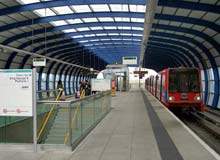
Since opening in 1987, the Docklands Light Railway (DLR) has been central to the regeneration of east London. Now its significance is far greater than originally envisaged.
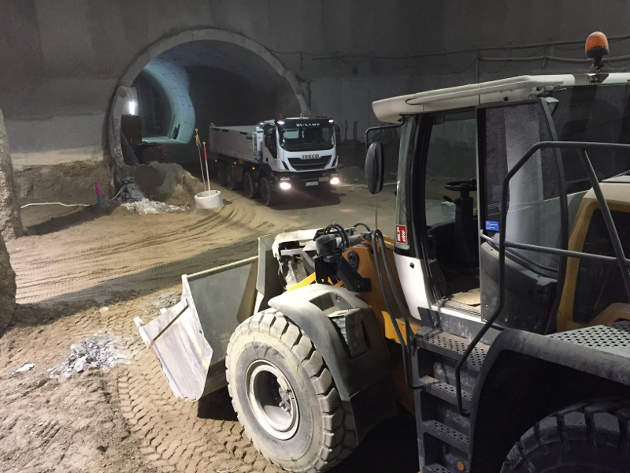
Die Kombilösung is a state-of-the-art hybrid tram-train system being developed in Karlsruhe, Germany.
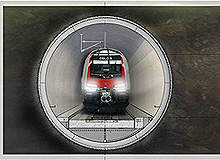
Follo Line is a planned 22.5km (14 miles) high-speed railway line between Norway's capital city Oslo and the suburban town of Ski. The double-track line will run parallel to the Østfold Line.
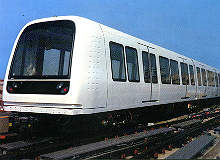
Denmark's capital city, København (Copenhagen), took light rail and metro technology to another level in October 2002 by opening an extensive system capable of being operated entirely without drivers. The project gained momentum through the area to be covered not being on the city's S-tog suburban heavy rail network.
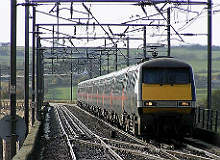
An upgrading programme for the 393-mile (632km) East Coast Main Line (ECML) route between London and Edinburgh, and its key divergences serving Leeds, Bradford and Glasgow, was thrust into a new context during 2007.

The Municipality of Budapest and the State Government ordered the construction of a mass transit underground system in early 1998. The project was vigorously examined, and deemed to be the best answer to Budapest's increasing transport problems.
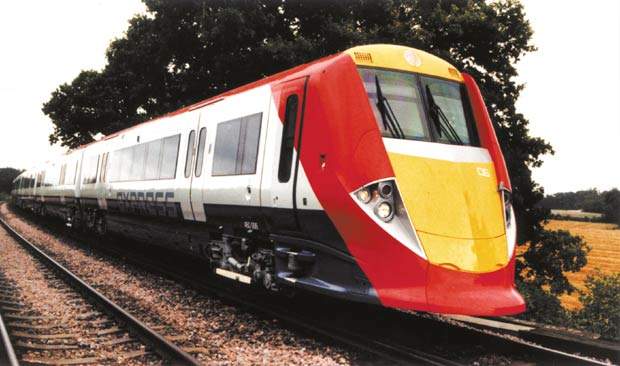
Gatwick Express, the first dedicated city centre to airport rail link in the UK, has undergone a major service transformation with the introduction of a fleet of brand new trains at the end of 2000. However, February 2006 saw the UK Government announce its likely demise because it is using up valuable line capacity.
Having recently delivered high accuracy aerial mapping for above ground lines of parts of the London Underground and Docklands Light Rail network, Atkins is now working with Transport for London to supply similar quality data of the above ground Jubilee, Northern and Piccadilly lines for London Underground.
Atkins is seeking to maximise its position in the rapidly growing international rail market to better identify and resource key opportunities, and to harness key skills, experiences and innovation from across the Group.
A new report, published today, details the costly impact to Britain if High Speed 2 is derailed. ‘Great Britain: connected or not?’, which was developed by the HSR Industry Leaders Group, outlines how failing to build HS2 will leave a clogged Britain, unable to meet its full potential, lagging behind the rest of the world in terms of infrastructure development.
A study produced by Atkins has shown ways to reduce travel time on an important rail route to Germany that crosses the northern to the southern part of Western Denmark, without any additional major infrastructure works.
Less than five years after works began on Crossrail, Europe’s largest infrastructure project today reached the halfway point of its construction. Atkins is involved in seven of the ten new major stations, and the western twin bored tunnels in a joint venture with Arup.
Atkins has announced the appointment of Professor Peter Woodward as its first-ever Chair of High-Speed Rail Engineering for the UK.
The Los Angeles County Metropolitan Transportation Authority (Metro) has selected Atkins to serve as a General Engineering Consultant (GEC) in support of Metro’s rail network operations, maintenance and expansion plans.
The Metropolitan Transportation Authority (Metro) of Los Angeles County has selected Atkins to be a part of its General Engineering Consultant 'bench' contract to provide general engineering consultant (GEC) services in support of Metro’s day-to-day rail system operations.
Atkins and Heriot-Watt University have signed a historic memorandum of understanding to create a centre of excellence for high-speed rail, aiming to push the boundaries of railway track research beyond high-speed into the realm of ultra-high-speed.
Network Rail has appointed a joint team of Atkins and Parsons Brinckerhoff as Lead Design Organisation (LDO) and System Integrator for the electrification of the Great Western Mainline.
Work has started on the first phase of a £250 million programme to improve performance and capacity on the Stafford section of the West Coast Main Line.
Atkins has combined forces with TUC RAIL, the design consultancy arm of the Belgian Railways Infrastructure Manager Infrabel, to deliver projects collaboratively in the UK and potentially overseas.
After working for Atkins in England for 15 years, Graham Stroud, chartered engineer (CEng), has transferred to Atkins’ North American transit and rail practice as project director of asset management services.
British Prime Minister David Cameron climbed aboard the Dubai Metro on Monday morning when he visited the UAE, and he used the trip to highlight the excellent track record of UK-based firms such as Atkins in supporting the UAE’s critical infrastructure needs.
Atkins is helping to deliver a comprehensive new multimodal land transportation strategy for Brunei Darussalam, aimed at boosting the country’s economy, providing greater travel choice and reducing its environmental impacts.