
American Solar Rail (ASR), developer of the innovative Railway Transportation System patent enabling in-transit battery recharging and continuous-motion passenger exchange, has won the 2025 Railway Technology Excellence Award for Innovation in Sustainable Rail. ASR was recognized for its ability to deliver shorter end‑to‑end passenger delivery times, reduce lifecycle energy costs, and provide a scalable, financeable path to modern passenger rail on infrastructure America already owns.
ASR’s system integrates the EMDI® (Embarkation/Disembarkation) railcar with corridor‑sited solar generation and distributed Battery Energy Storage Systems (BESS) that support battery‑electric propulsion and energy transfer while in motion. Modeling indicates that removing dwell can reduce total trip time by 20–30%, enabling city‑to‑city times competitive with 150–200 mph operations on upgraded Class 5–6 corridors and targeted Class 7 segments, without requiring catenary infrastructure or Class 9 track.
Go deeper with GlobalData


Discover B2B Marketing That Performs
Combine business intelligence and editorial excellence to reach engaged professionals across 36 leading media platforms.
A 21‑month feasibility review conducted by MxV Rail, a subsidiary of AAR, found no single item that would make the system unfeasible and recommended advancing a technical advisory process and safety case. Engagement with the Federal Railroad Administration (FRA) has begun, and prototype development and certification activities are being structured within existing battery‑electric rail vehicle standards.
High‑performance outcomes by removing the physics of delay
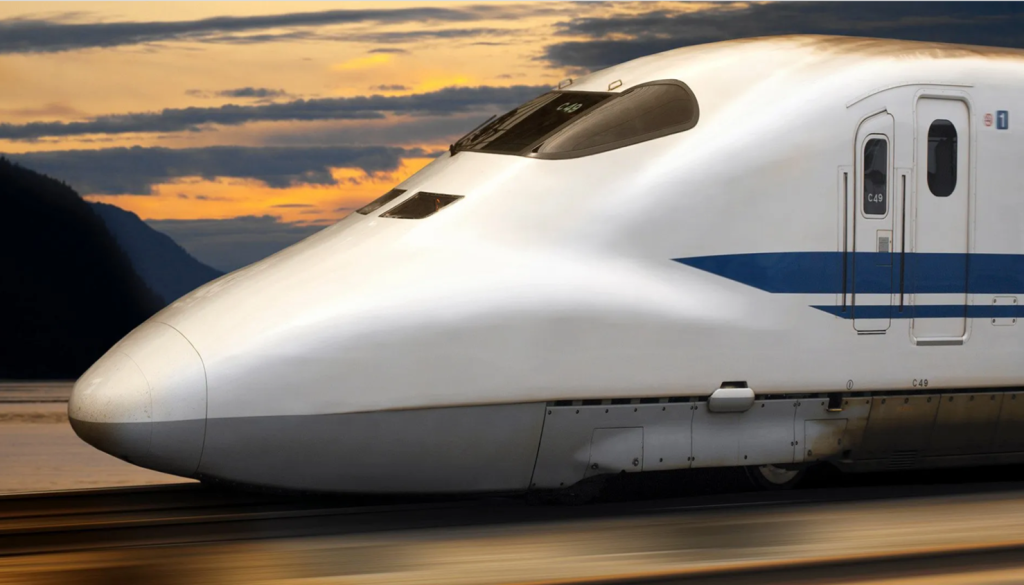
ASR reframes rail performance around the physics of time rather than ever‑higher top speeds. Conventional operations lose time at every stop—slowing, dwelling for boarding and alighting, then accelerating back to line speed. The EMDI railcar addresses that dwell‑time penalty through continuous‑motion exchange.
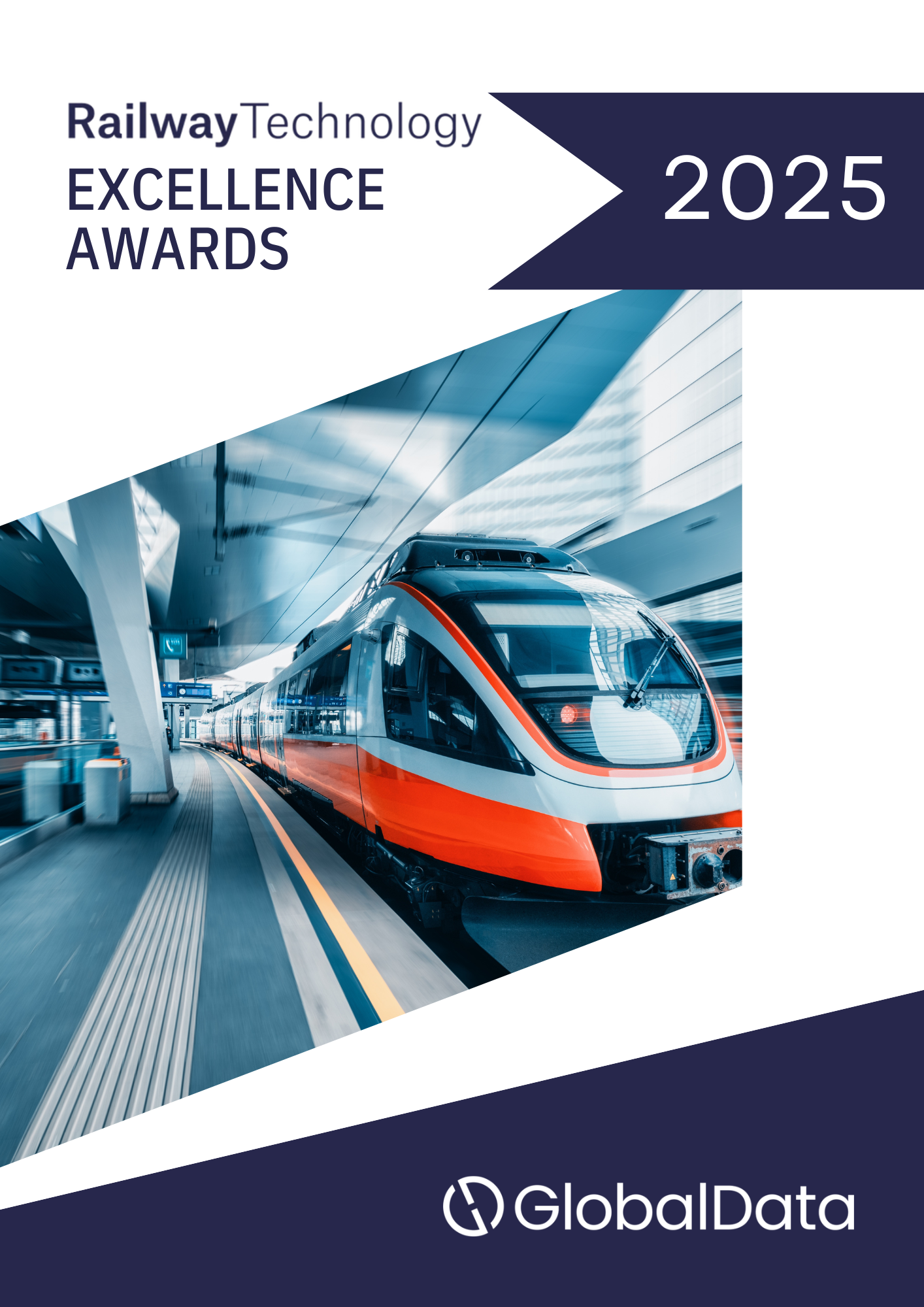
A battery‑powered EMDI unit couples with the rear of a slowing mainline train at a station approach, enables passengers to board and alight while the train maintains much of its speed, transfers energy to the train on the move, [DELETED:and then returns disembarking passengers to the next depot and to recharge.] [INSERTED:and then returns the EMDI unit to the next depot to disembark passengers and recharge.] By separating boarding from travel, ASR preserves average speed through stations, turning station time into travel time and enabling more stations—and therefore broader access—without eroding timetable competitiveness.
Independent feasibility and a practical path to deployment
Engineering, operational, and signalling aspects of the architecture have undergone detailed review by MxV Rail, a subsidiary of AAR. The lab reported that “no single item” was identified that would make such a system completely unfeasible and recommended advancing a technical advisory process and safety case.
Timetable analyses and third‑party reviews referenced in ASR’s documentation—including work at ETH Zurich and input from engineers contributing to the Georgia 2015 State Rail Plan—indicate shorter end‑to‑end times at corridor‑class line speeds, particularly where intermediate stops are frequent.
Engagement with the FRA has begun, and prototype development and certification work are being pursued within the existing standards framework for battery‑electric rail vehicles. Because the concept operates on existing classes of track with targeted upgrades, the pathway to phased deployment aligns with U.S. regulatory practice and funding realities.
Renewable energy as propulsion and asset

ASR’s operating architecture integrates energy into the railway rather than treating it as an external utility. Solar generation positioned along the right‑of‑way feeds distributed BESS to power electric traction and support in‑transit battery recharging, eliminating reliance on continuous catenary and reducing capital intensity. Line‑side storage smooths peaks and supports operations in low‑sun conditions; backup generation provides resilience as needed. By sizing solar capacity beyond traction demand, ASR creates a “solar‑rail spine” that can also supply nearby uses—such as EV charging—turning energy from a cost center into a revenue‑producing asset and lowering lifecycle energy costs. The result is a propulsion cycle designed to be low‑cost, resilient, and less exposed to fuel‑price volatility, while advancing decarbonization goals.
Station and track geometry engineered for throughput

The operating plan extends beyond the EMDI to how stations and track are laid out. Stations are designed so one train can bypass another at speed, removing a persistent source of delay and maintaining fluidity on two‑track alignments. The coupling‑and‑decoupling sequence is supported by sensor‑guided alignment and precise traction control to match speeds during the exchange, with regenerative braking where applicable to recover energy.
This geometry and control philosophy reduce unnecessary slow‑down cycles, enabling high‑speed outcomes at lower infrastructure cost and complexity. Where conditions allow—for example, along interstate rights‑of‑way—new Class 7 track can be added to capture more of the EMDI’s performance potential; elsewhere, existing Class 5–6 lines can be upgraded selectively to deliver meaningful gains in average speed and coverage.
Scaling fast on corridors America already owns
A central advantage of the model is its ability to launch on existing corridors with targeted upgrades, bringing fast, frequent service to hundreds of mid‑sized communities located on or near Class 5–6 freight lines. Cost and performance benchmarking against GDOT/FDOT plan data indicates that competitive average speeds can be achieved at substantially lower per‑mile capital intensity than dedicated 180–220 mph lines, because the concept minimizes dwell rather than chasing ever‑higher top speeds.
The proposed Georgia corridor between Atlanta and Savannah illustrates the approach: leverage interstate‑adjacent and legacy rail geography, link airports and ports, co‑locate renewable energy generation and transmission, and add stations without sacrificing end‑to‑end time. On routes with multiple intermediate stops—typically every 20–30 miles—the cumulative benefit of preserving average speed is most pronounced.
Resilience, reliability, and broader system benefits
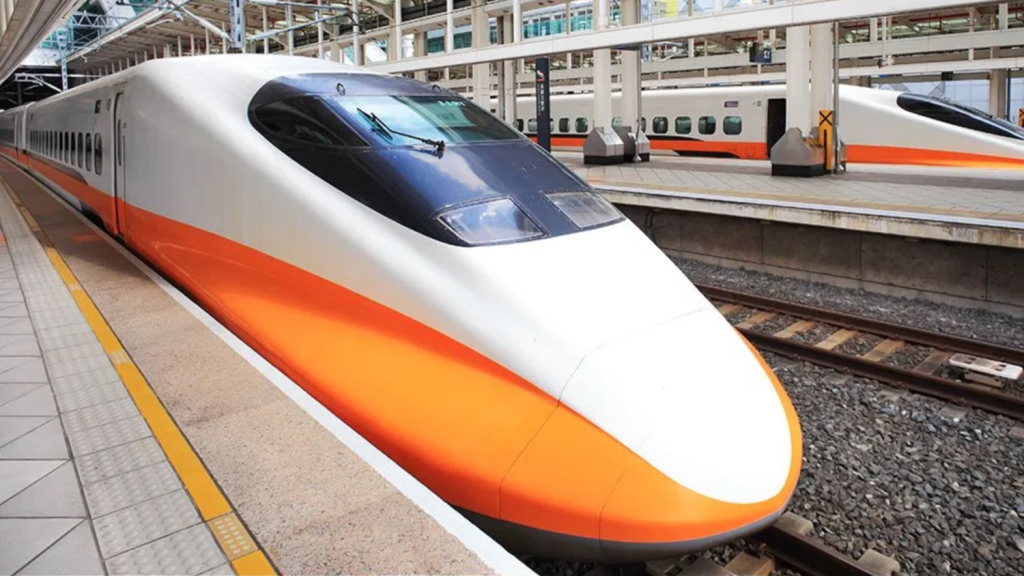
The architecture is designed with resilience in mind. EMDI units can continue to move people and equipment between depots and stations even when mainline services are constrained, and the distributed solar‑plus‑storage footprint adds energy resilience along the corridor. By generating renewable energy on‑corridor and storing it at depots, the system can help smooth demand and contribute to local reliability, aligning transportation investment with the broader renewable‑energy transition. This dual‑use of rail rights‑of‑way—mobility plus energy—supports stable operations while advancing climate objectives.
Why the recognition matters
ASR demonstrates that high‑performance rail is a function of time saved, not just speed attained. By eliminating the physics of delay, electrifying propulsion with corridor‑sited solar and storage, and reusing existing infrastructure with smart geometry, the model delivers faster trips, lower operating emissions, and a financeable path to scale. Independent feasibility work has been completed, regulatory engagement is active, and a clear plan exists to move from prototypes to phased deployment. For passengers, that means shorter, more reliable journeys; for cities and states, a way to extend modern rail beyond major metros; and for the rail sector, an operating and energy architecture designed for real‑world conditions and near‑term impact.

“Dwell time is the last 19th‑century barrier in rail, and we set out to remove it,” says Robert E. Green, CEO of American Solar Rail. “Once you eliminate wasted time at stations, performance becomes a function of both time and speed, not speed alone. That is what allows every class of rail to achieve more, affordably, on the infrastructure we already have. At ASR, our mission is simple: waste no time and build a system that can endure for centuries.”
– Robert Green, CEO, American Solar Rail
Company Profile
American Solar Rail (ASR) was built to solve what millions of Americans lose every day — time. As interstates across the country slow to a crawl under increasing congestion, ASR introduces a new mobility architecture that eliminates railroad dwell time, enabling the system to deliver shorter delivery times on the rail infrastructure America can affordably build, modernize, or already has in place. By replacing the physics of delay with the physics of efficiency, ASR offers a new model for passenger rail in the United States.
More than a century ago, early innovators imagined continuous-motion passenger exchange. What they lacked was the safety and energy architecture required to make it viable. ASR is the first company to enable the concept by integrating modern battery propulsion, in-transit recharging, depot-based energy transfer, and optimized Class 6/7 operations into a unified, buildable system. This integration forms the foundation of ASR’s patented Railway Transportation System (US 11,505,222 B2).
ASR shifts national rail development away from focusing solely on higher top speeds and toward the more meaningful metric of total passenger delivery time. The company’s EMDI® (Embarkation/Disembarkation) system reduces journey times by up to 30% while operating at the regulatory maximum of 110 mph on existing Class 6 track — without requiring catenary infrastructure or Class 9 track. This creates a cost-effective, rapidly deployable pathway for modern passenger rail across America’s underserved corridors.
At the core of ASR’s system is the integration of solar and other renewable energy sources with energy-storage management, transforming the railroad right-of-way into a renewable-energy corridor. This solar-energized rail spine supports in-transit battery charging, reduces lifecycle energy costs, and provides long-term grid resilience — demonstrating how passenger rail can evolve into one of the nation’s most efficient clean-energy assets.
ASR’s technical foundations are supported by analysis from the AAR’s subsidiary, MxV Rail, whose engineers have reviewed ASR’s operational model, performance characteristics, safety alignment, and written an exhaustive Feasibility Study confirming that this rail transportation system is fully buildable. ASR has also engaged in constructive dialogue with the Federal Railroad Administration (FRA), ensuring system compatibility with existing regulations and enabling a pathway for safe, accelerated deployment.
With one patent enabling three advanced capabilities — continuous-motion passenger exchange, in-transit battery recharging, and a renewable-energy rail corridor — American Solar Rail presents a modern rail system built for the next century. ASR delivers cleaner, quicker, and more reliable mobility on infrastructure the nation can affordably build, modernize, or already has. The company’s mission is clear: to restore time to the millions of Americans who can no longer afford to lose it.
Links
Website: https://americansolarrail.com/


