

Etihad Rail is a 1,200km railway infrastructure network connecting the United Arab Emirates (UAE) and the Gulf Cooperation Council (GCC) region.
The railway line runs from the Saudi border across the UAE to Fujairah on the Indian Ocean coast. It was developed with an investment of Dh40bn ($11bn).
Recommended White Papers

Recommended Buyers Guides

Etihad Rail (previously Union Railway Company) was established in June 2009 to develop, build, and operate the railway infrastructure. It is owned by the government of Abu Dhabi (70%) and the federal government of the UAE (30%).
Completed in February 2023, the railway infrastructure became a vital part of the $100bn GCC rail programme.
The GCC railway network connects the UAE with Saudi Arabia, Qatar, Kuwait, Bahrain, and Oman.
It offers a sustainable and efficient alternative for the transportation of freight and can handle 50 million tonnes (mt) of freight.
The railway project significantly contributes to reducing road traffic emissions and promotes trade and social development in the Emirate and across the GCC countries.
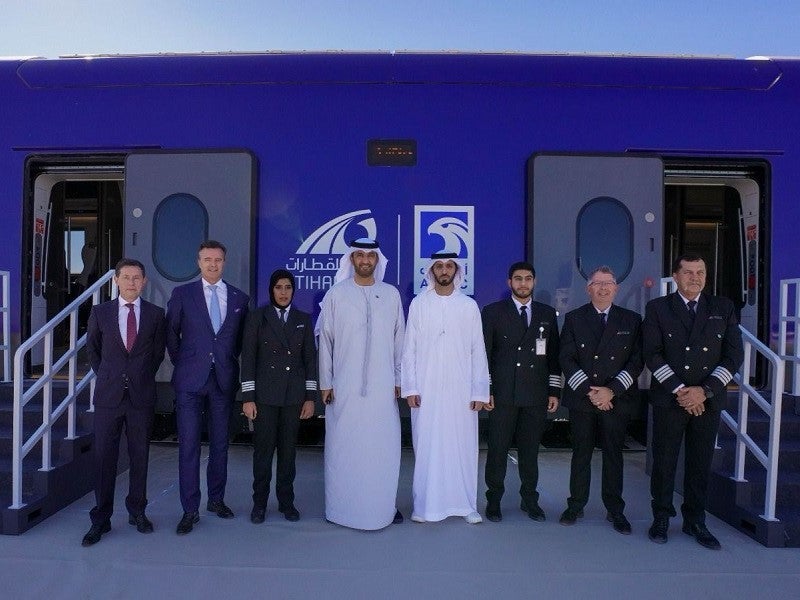
In October 2025, Etihad Rail partnered with Keolis to launch passenger rail services on the railway network. The passenger services are expected to commence in 2026.
Etihad Rail project details
The Etihad Rail railway network passes through a wide range of geographical terrains, requiring the construction of 593 bridges and crossings, along with nine tunnels totalling 6.5km in length.
The network stretches westwards to the borders of Qatar and Saudi Arabia. The western section links Saudi Arabia via Ghweifat and the eastern section links Oman via Al Ain. It then extends to the northern emirates and Fujairah.
The extensive network connects various strategic locations, including Abu Dhabi, KIZAD, Khalifa Port, Jebel Ali Port in Dubai, Sharjah, Ras al-Khaimah, and Fujairah.
It connects with the sources of raw materials, industrial areas, ports, and major population centres.
Details of passenger rail services
The passenger services on the network will provide connectivity within the UAE by connecting 11 cities from Al Sila to Fujairah, with annual ridership expected to reach 36.5 million passengers by 2030.
The first four passenger stations will be located in Abu Dhabi, Dubai, Sharjah, and Fujairah, with the Dubai and Fujairah stations becoming important nodes in the national rail network.
The railway project will reduce the travel time between Abu Dhabi and Dubai to 50 minutes, between Abu Dhabi and Fujairah to 100 minutes, between Dubai and Fujairah to 50 minutes, and between Abu Dhabi and Al Ruwais to 70 minutes.
Construction of the major transport network
The construction of the Etihad Rail project was segmented into two main stages.
Stage one encompassed the 264km western section from Al Ruwais to Shah and commenced operations in January 2016. It was developed in partnership with the Abu Dhabi National Oil Company (ADNOC) to transport roughly 7mt of granulated sulphur annually from the inland sites to Al Ruwais for export. The construction included a railway depot at Mirfa, bridges, and communication systems.
Stage two began in early 2020 and encompassed a total of 605km. Completed in February 2023, the construction in this stage was divided into several packages to promote competitive tendering.
Package A, a 139km link connecting Ghuwaifat to Stage One, was completed in September 2021. Construction of Package B comprised the 216km section from Tarif to Saih Shuaib, and Package C included a 94km stretch from Jebel Ali to Sharjah.
The final segment, Package D, was a 145km section between Dubai and Sharjah and included the construction of nine tunnels.
Additionally, a 256km direct line between Abu Dhabi and Dubai was completed in March 2022, representing an investment of Dh50bn ($13.6bn). This section features 29 bridges, 60 crossings, and 137 drainage channels.
Rolling stock of Etihad Rail
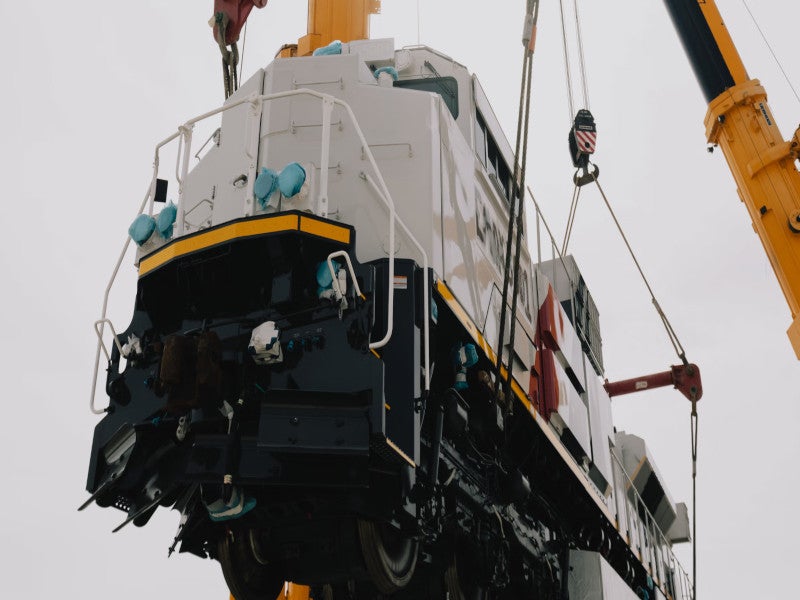
Etihad Rail operates heavy transport locomotives and multi-purpose wagons, including the SD70ACS electro-motive diesel locomotives and wagons. The first batch of the new SD70 locomotive fleet was received in August 2022.
The SD70 locomotives are equipped with the European Train Control System (ETCS) Level 2 signalling system. Each locomotive can pull 100 wagons or 5,000t. The locomotives feature advanced cooling systems and are designed to withstand the geographic and climate conditions in the GCC region while ensuring high performance and efficiency.
The locomotives are 22.63m in length and run at speeds of up to 120km/h. They are made of steel welded structures and weigh 193t. The heavy freight trains transport goods such as hydrocarbons, aluminium, rocks, cement, and iron.
The various types of wagons operated on the railway network include hopper wagons, flat wagons, single-well container wagons, and five-car well container wagons. Each wagon type has various carrying capacities. The wagons are equipped with advanced braking, signalling, control, communication, and safety systems.
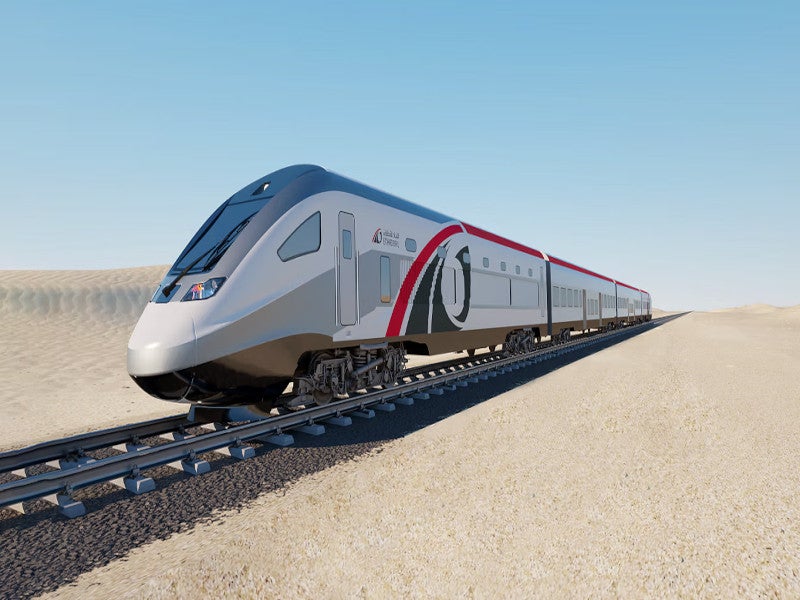
Etihad Rail plans to operate push-pull trains on the passenger line. The passenger trains will operate at a speed of 200km/h and have a capacity of 400 passengers per train.
Signalling and communications along the UAE Etihad Rail network
Etihad Rail and Etisalat, a telecommunications company, signed a memorandum of understanding (MOU) in April 2011 to develop advanced telecommunication systems and infrastructure for the safe and efficient operation of the railway network.
In June 2011, an MOU was signed by Etihad Rail and communications specialist Du for the development of integrated telecommunication infrastructure for the railway project.
Du provided technical support and consultancy services.
Financing details
In February 2022, Etihad Rail signed a Dh1.99bn ($541.7m) finance agreement with First Abu Dhabi Bank for developing passenger transport services on the railway network.
The arrangement is part of the UAE National Railways Programme, which is the UAE’s largest land rail network of its kind.
Contractors involved
In October 2024, Hitachi Rail was contracted to supply its advanced Mobility-as-a-Service (MaaS) platform to Etihad Rail. The unified digital system will offer a single interface for passengers to access Etihad Rail’s services once they become operational, handling everything from ticket booking and journey management to payments.
Hitachi Rail STS previously received a Dh1.6bn ($435.5m) contract in 2019 to design and implement an ETCS level 2 signalling system for Stage Two’s freight route, in addition to supplying telecom systems and an 800km-long 11kV power system.
Etihad Rail signed an MOU with Thales to collaborate on rail control, smart stations and ticketing technologies, supporting the achievement of smart and sustainable mobility in September 2022.
In July 2022, ENSCO Rail was awarded a contract to deliver a cutting-edge track inspection vehicle for the project.
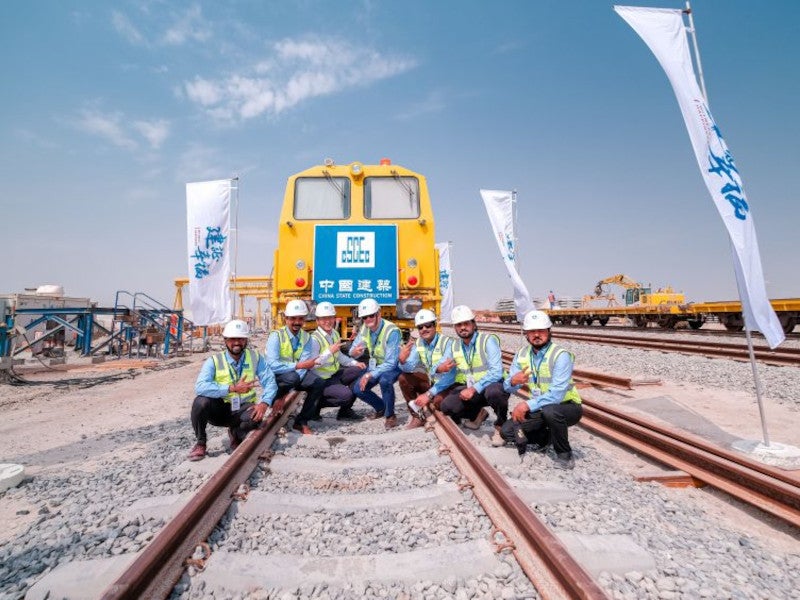
A joint venture (JV) between SK Engineering and Construction and China State Construction Engineering (CSCEC) was entrusted with the civil engineering, track works, and design and build aspects of Stage Two.
Package B was awarded to China Railway Construction (CRCC), and Package C to Ghantoot Transport and General Contracting.
Construcciones y Auxiliar de Ferrocarriles (CAF), CRCC, Progress Rail Locomotive, China South Locomotive and Rolling Stock, and Electro-Motive Diesel (EMD) supplied trains, wagons and locomotives for the project.
National Projects & Construction (NPC), in a JV with CRCC, was awarded a $1.3bn contract for Stage 2D. The JV was responsible for constructing all rail components and related infrastructure.
Jacobs Engineering Group was selected in July 2018 to provide essential technical and programme consulting services.
Etihad Rail DB, a JV between Etihad Rail and Deutsche Bahn (DB), was appointed as the shadow operator for stages one and two.
In October 2011, a consortium comprising Saipem, Maire Technimont, and Dodsal Engineering and Construction was awarded a Dh3.3bn ($898m) contract for the civil infrastructure and tracks for Stage One.
A JV between Aecom and Parsons International was awarded a project management consultancy (PMC) services contract in May 2011.
Additional contributors include AM INFRA, JD Rail, WSP, BG&E, Keller Grundbau, Aqleh Engineering Consultant (AEC), BG&E, PCM Strescon Overseas Ventures, Liebherr Transportation Systems, BEEAH Tandeef and Egis.
Other contractors involved are Emerge, Dextra, Systra, Atkins, UBS, Mircom, Alghanim International, Salcef Group, Officine Maccaferri, L&T Construction, and Hills and Fort Construction.
Suppliers include Vossloh, Marcello Brugola, Technopole, Corys Piping Systems and Sixense, alongside voestalpine Railway Systems, mageba, SALFO & Associates, and GEODATA Engineering.
