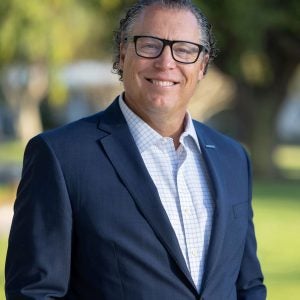
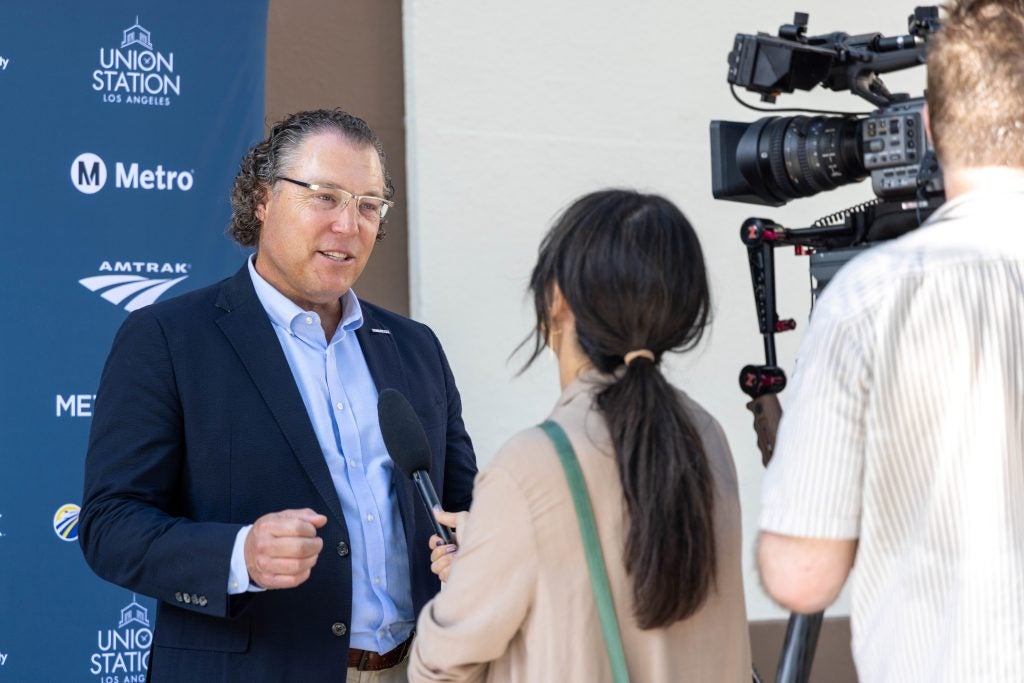
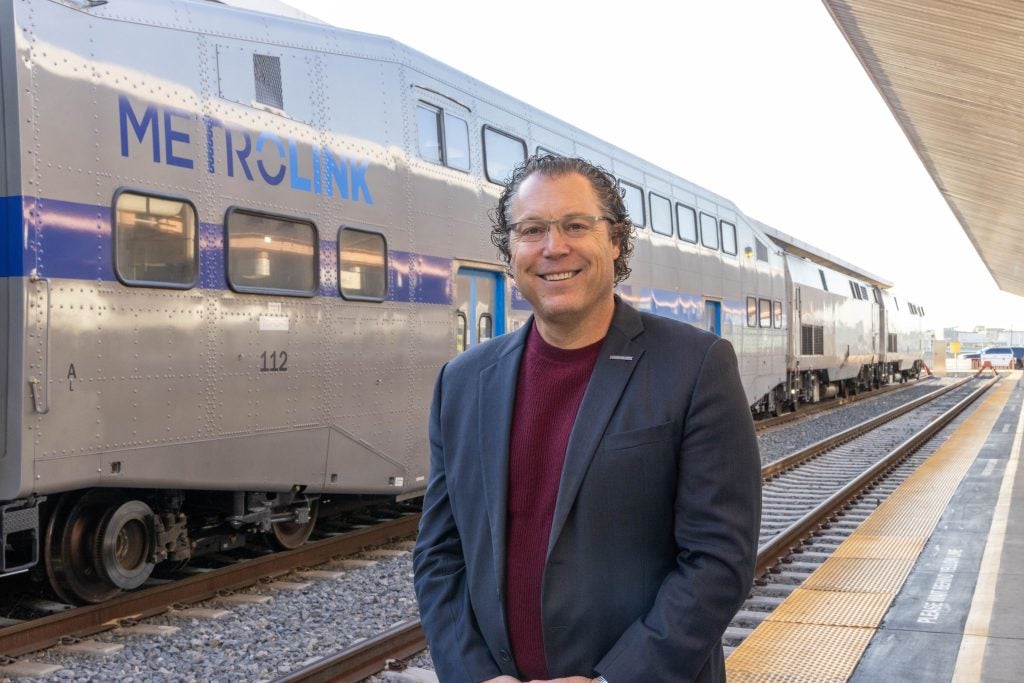
Darren Kettle, CEO of the Southern California Regional Rail Authority, which operates service as Metrolink, discusses the agency’s transformation from a traditional commuter rail to a forward-thinking regional mobility leader. In this exclusive interview, Kettle reveals how award-winning innovations—from earthquake early warning systems to zero-emission trains—are shaping a safer, more equitable, and sustainable future for Southern California’s rail network, all while navigating the challenges of funding, governance, and evolving passenger needs.
Metrolink is a recipient of three awards in the 2025 Railway Technology Excellence Awards.
Go deeper with GlobalData

Discover B2B Marketing That Performs
Combine business intelligence and editorial excellence to reach engaged professionals across 36 leading media platforms.
Congratulations on winning the 2025 Railway Technology Excellence Awards. How does this achievement reflect Metrolink’s broader mission and long-term vision for public transportation in Southern California?
Darren Kettle: These awards validate our commitment to innovation, safety, and equity. They highlight that Metrolink is no longer just a commuter rail system. We are evolving into a genuine regional rail provider that connects communities, reduces emissions, and expands access to opportunity.
Through this progression, which I call Metrolink Reimagined, we are charting a long-term vision that looks at how our service, infrastructure, and policies can transform mobility in Southern California. The projects being recognized—the Student Adventure Pass, our Wireless Crossing Nearside Station Stop technology, and our Earthquake Early Warning System—are all examples of how innovation directly supports that vision. These initiatives improve safety, reliability, and accessibility, while laying the groundwork for how we serve the region in the future.
At the same time, we are currently piloting a major fare restructure that simplifies our pricing system. By making fares easier to understand and more predictable, we are removing barriers that have historically made transit harder to use. This clarity and simplicity also promotes equity, ensuring that more riders, from students to working families, can benefit from a system that works for them.
Together, these initiatives demonstrate that our broader mission is not just about running trains. It’s about delivering a more equitable, sustainable, and connected future for everyone in our region.
Metrolink has been called an “organization of firsts,” from renewable fuels to real-time earthquake detection. What drives this culture of innovation?
Darren Kettle: The railroad industry has not traditionally been known for its nimbleness, but we have had to create a culture of adaptability at Metrolink. We see firsthand that the way people travel has changed since the pandemic, and we’re not afraid of challenging old assumptions. Whether it’s zero-emission trains, real-time alerts, contactless payments, or pioneering safety technology, we encourage our teams to bring forward new ideas. Innovation is never about technology alone; it’s about building a mindset that puts the customer first and is willing to evolve.

The Wireless Crossing Nearside Station Stop (WCNSS) technology has proven successful. What will determine how quickly this can be scaled?
Darren Kettle: Funding is always the key factor. We’ve been fortunate to have federal partners through programs like CRISI, and we’re grateful for congressional support. But rolling this out across all 52 eligible crossings will take time and resources. That said, the early results are demonstrating the tangible value these systems deliver to local communities, and our commitment is to keep advancing technologies that save lives and improve efficiency.
Beyond crossings, what other areas of customer experience or operations do you see benefiting most from technology-driven solutions?
Darren Kettle: There’s tremendous potential in AI and digital platforms to make the customer journey seamless, from personalized trip planning to self-service modules that improve customer-support wait times and drive efficiencies. We’re also looking at how technology can help us manage operations more efficiently, reducing costs while improving reliability. It’s about creating a system that is as smart as it is safe.
Integrating USGS ShakeAlert technology into your Earthquake Early Warning system was a groundbreaking step. What was it like seeing it in action this year?
Darren Kettle: We previously experienced real-world activations where trains were slowed, but in April of this year, a 5.2-magnitude earthquake near Julian, California, caused several trains to automatically stop for the first time. While an earthquake is not usually reason to celebrate, after many simulations in controlled settings, it was exciting to see the Earthquake Early Warning system do exactly what it was meant to do in real life! This earthquake was a good test for whether and when we have a larger seismic event within our network. The results showed that we are well-prepared now for when it happens.
Partnerships seem central to these initiatives. How do collaborations with federal agencies, local governments, and universities shape Metrolink’s approach?
Darren Kettle: Collaboration is essential. Whether it’s Caltrans, the USGS, or local partners, we know innovation doesn’t happen in isolation. These partnerships allow us to test, validate, and implement at scale. Going forward, I see public-private partnerships as equally important, especially as we explore new technology and funding models.
How does Metrolink incorporate feedback from riders, including students, into service planning?
Darren Kettle: Feedback is central to our work. With programs like the Student Adventure Pass, we partnered directly with colleges and students to design a program that works for them. More broadly, we use surveys, community meetings, digital feedback tools, and staff physically on trains and at stations to stay close to our riders. Their voices directly influence the service and products we deliver.

Are there emerging technologies that particularly excite you for their potential in passenger rail?
Darren Kettle: What excites me most is the momentum toward zero-emissions trains. At Metrolink, we see this as a collective journey that spans multiple technologies and innovations. Our Zero Emissions Multiple Unit (ZEMU) pilot, launched on the Arrow service in mid-September, is a significant step forward, but it’s just one piece of a much larger effort to transition our fleet and operations away from fossil fuels. I’m also energized by how open payments and digital tools will make riding transit more intuitive, especially for people new to rail.
What are the biggest challenges Metrolink faces as it continues to innovate?
Darren Kettle: Funding and governance are always challenges, given that we serve six counties with multiple partners. But innovation requires persistence, and we’ve shown that even in a complex environment, we can lead the way. We’re building the organizational muscle to keep driving change, even when the path is complicated.

Finally, what message would you like to share with current and prospective riders about Metrolink’s commitment?
Darren Kettle: Our promise is simple: we will continue to put safety, innovation, and community at the center of everything we do. We’re reimagining Metrolink so that riding the train is not only convenient and reliable, but also the best choice for how Southern Californians move and connect.


