
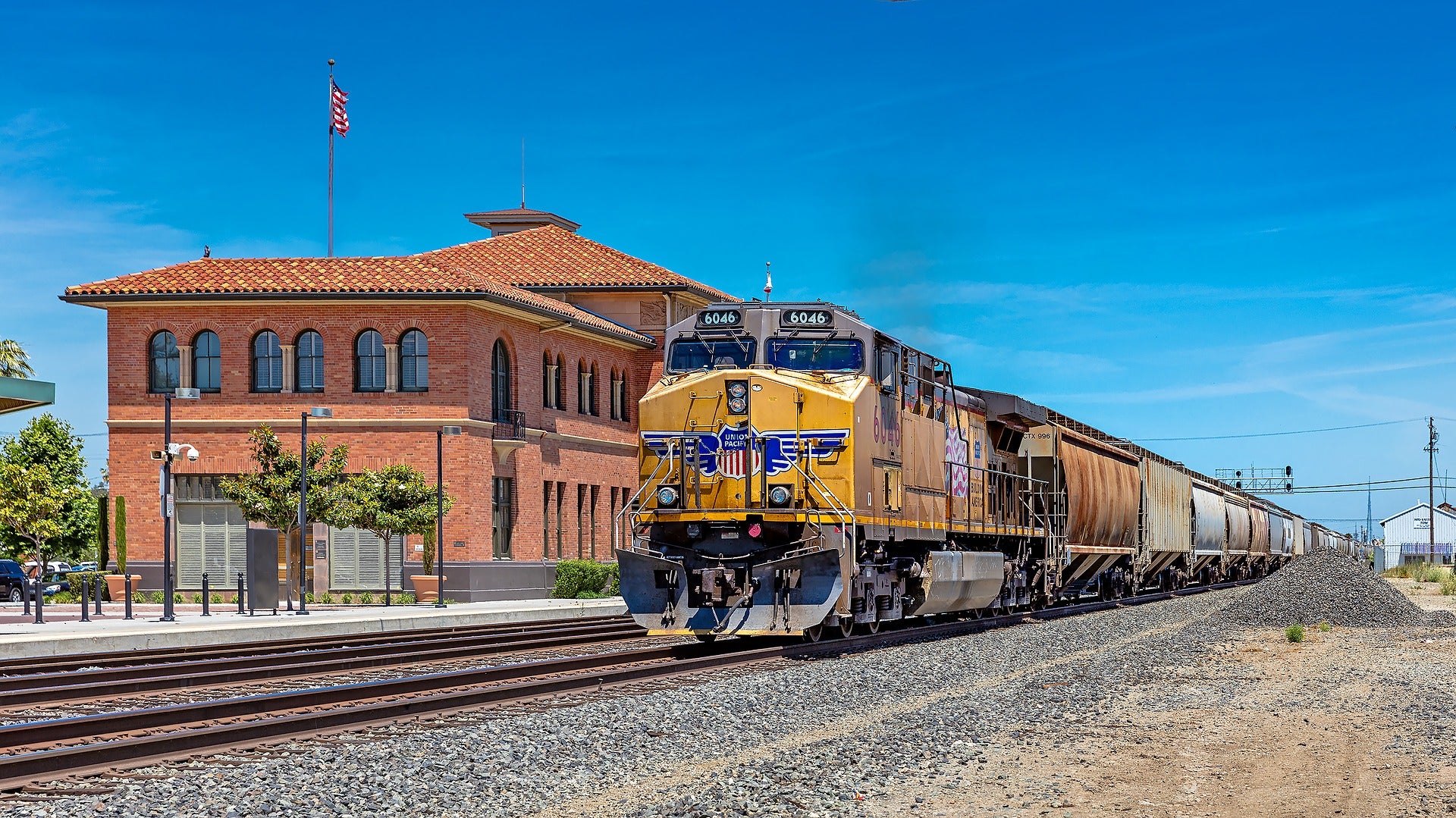
US railroads are increasingly witnessing a fall in their cost advantage for domestic shipping compared to trucks, according to a report by global business information provider IHS Markit.
US shippers see reduced financial profit when using an intermodal method of transport for freight transfer – where trains are on-loaded and off-loaded by trucks – compared to using just trucks throughout the entire journey, the report said. As a result, they are re-examining the value proposition of domestic intermodal rail in their supply chains.

Discover B2B Marketing That Performs
Combine business intelligence and editorial excellence to reach engaged professionals across 36 leading media platforms.
While intermodal rail has offered a slower, lower-cost option for domestic shippers in the past, truckload prices are falling and have proven to be more cost-effective on lanes under 2,000 miles in length.
This makes intermodal rail more expensive than trucking in secondary markets, according to the US Domestic Intermodal Savings index produced by IHS Markit’s biweekly magazine, Journal of Commerce (JOC).
The index used JOC’s own data of intermodal and truckload rates which consisted of invoiced prices given to shippers.
Shippers compared transit times, on-time performance, and total cost between using intermodal and just trucks when deciding how to transfer freight.
US Tariffs are shifting - will you react or anticipate?
Don’t let policy changes catch you off guard. Stay proactive with real-time data and expert analysis.
By GlobalDataCommenting on the falling financial incentive for shippers using intermodal methods, JOC associate editor and author of the report Ari Ashe said: “The new data from the U.S. Domestic Intermodal Savings Index illustrates how shippers and brokers are becoming increasingly sensitive to whether intermodal or trucking is best for the various lanes they manage.
“With C-Suite pressures to keep transportation costs down, shippers are looking to make the most informed decisions about modal choices to wisely spend down,” said Ashe.
US railroads have been facing slow growth, which has resulted in increased truck capacity, and shippers prefer to move goods via 53ft containers and trailers.
The trend of utilising intermodal methods declining among shippers was outlined in the Cass Freight Index, which said the freight shipment volume in the US across all modes of transportation – by truck, rail, air, and barge – fell 7.2% in June 2019 compared to June last year, the first batch of declines since the transportation recession of 2015 and 2016.
Additionally, the railway sector has seen a deterioration in being used for cargo, according to a report by The Association of American Railroads. It said the US rail traffic was down by 5.5% in June 2019 compared to last year.


