

A Swiss rack railway in the St Gallen canton has tested a collision warning system, which is the first stage of its planned change to driverless functionality.
The 1.96km route between Rheineck and Walzenhausen is a tourist rail service near Lake Constance (Bodensee, in the local Swiss-German) operated by local rail provider Appenzeller Bahnen (AB).
Go deeper with GlobalData


Discover B2B Marketing That Performs
Combine business intelligence and editorial excellence to reach engaged professionals across 36 leading media platforms.
Along with rail and rolling stock manufacturer Stadler, AB has begun testing the “NOVA Smartsense” collision warning system using the current rolling stock.
“This system is designed to detect obstacles in the track area at an early stage and automatically initiate train braking to avoid collisions. The next two years will be used to collect extensive data and experience with the collision warning system,” an AB spokesperson said.
The aim is to identify disruptive factors and processes on the Rheineck-Walzenhausen line at an early stage and to gain experience in dealing with this technology. These long-term tests are crucial to ensure the safety and efficiency of future driverless operations,” they explained.
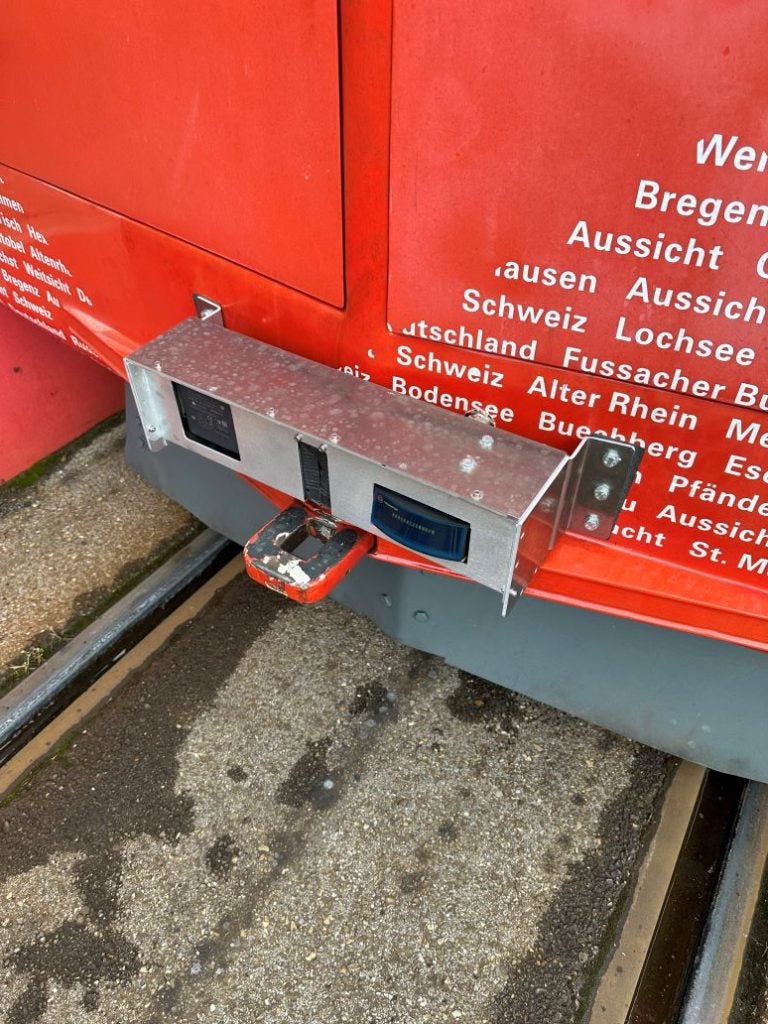
Although the current train, a single BDeh1/2 electric railcar, has been in service for 66 years since 1958, it’s not quite the original. The line first opened as a funicular in 1896 but was changed to a rack system in the middle of the 20th century, when the new car was bought.
But its long service life is coming to an end, with a Stadler driverless locomotive due to replace the ageing railcar in 2027.
According to AB, it will be “the first fully automated intercity adhesion and rack railway in the world”.



