
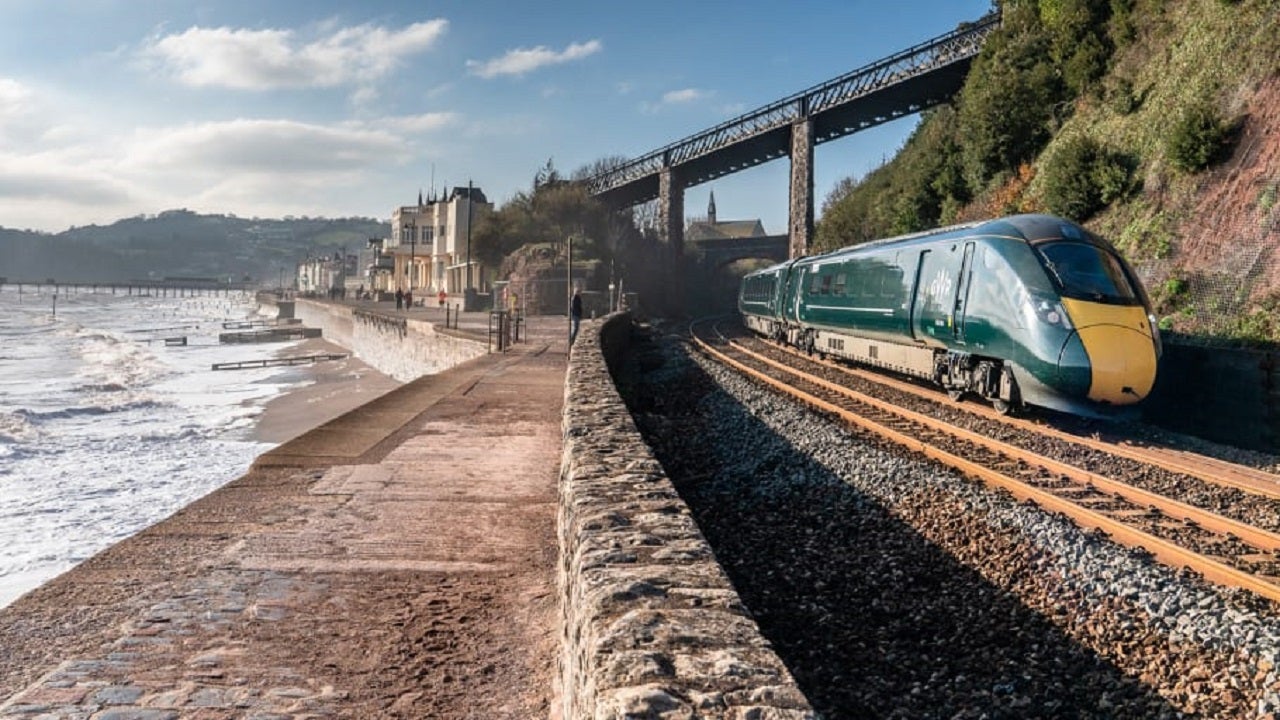
Hitachi and Eversholt Rail have signed an exclusive agreement to develop an intercity battery hybrid train for Great Western Railway (GWR) to transport passengers between Penzance and London, UK.
Hitachi said that the trials will be conducted to exhibit that the innovation meets safety standards and passenger needs.
Go deeper with GlobalData


Discover B2B Marketing That Performs
Combine business intelligence and editorial excellence to reach engaged professionals across 36 leading media platforms.
The line between the South West and London is not completely electrified, with the majority of the 483km journey requiring diesel power.
This partnership intends to have batteries replace a diesel engine as a power source on an existing Hitachi-built five-carriage train, which is currently called a bi-mode for its capability to shift seamlessly between electric and diesel power.
On non-electrified divisions of the route, the batteries will reduce fuel usage and carbon emissions by more than 20% by supplementing the engine power.
The train will also use battery power when travelling in and out of stations and surrounding urban areas, leading to an improvement of air quality and noise level reduction.
Hitachi Rail will draw upon the support of its battery partner, Hyperdrive Innovation, and expertise in Japan.
In July 2020, the two firms signed an agreement to create and develop battery packs for mass production at Hyperdrive’s HYVE facility in Sunderland, which is the UK’s first independent battery pack manufacturing unit.
The installation of the battery technology on trains will drive electrification, providing a low-emission alternative for domestic travel.
Rail Minister Chris Heaton Harris said: “This is an exciting partnership to develop technology that can make rail travel more sustainable across the UK’s network. Battery-powered trains will support us in our battle against climate change and poor air quality, and improve the overall passenger experience. As we continue to build back better, developments like this are major stepping stones towards achieving the UK’s 2050 net-zero emissions target.”
Hitachi Rail UK and Ireland country lead Jim Brewin said: “This partnership is an exciting opportunity to unlock new greener trains for passengers, reduce running costs for operators and cut carbon. At Hitachi Rail, we share the UK’s ambition for a net zero-emission future. Britain is in a unique position to become a global leader in battery trains, we want support the UK’s green economic recovery and levelling-up.”
Eversholt Rail CEO Mary Kenny said: “We are delighted to continue working in partnership with Hitachi to investigate the conversion of our Class 802 fleet to tri-mode by introducing battery technology. Eversholt Rail is committed to ensuring our fleets meet the UK Railway’s decarbonisation commitments.”
In August 2018, Hitachi built the 36 intercity express trains that were introduced by GWR in south-west England.



