
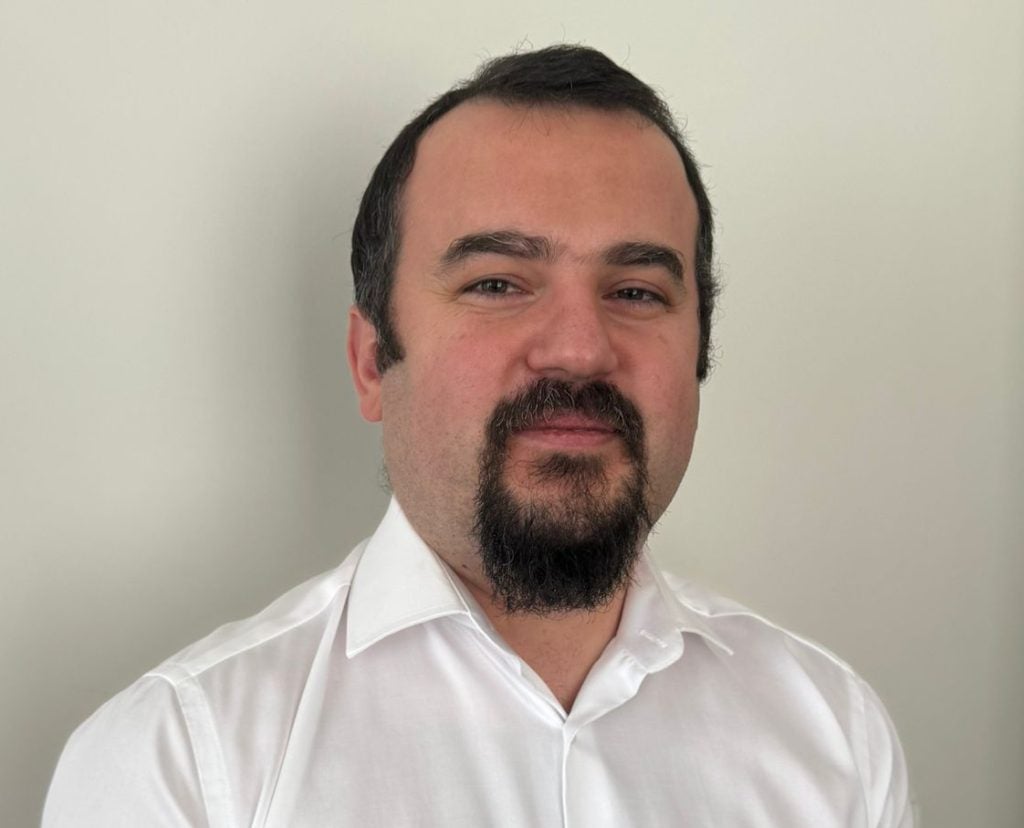
GÜRAY KERA, RAMS Chief at Yapı Merkezi İDİS Engineering, discusses the company’s award-winning approach to innovation and safety in railway technology, the challenges of adapting global standards to local needs, and the strategic vision driving the transformation of rail systems in Turkey and beyond.
Railway Technology (RT): Congratulations on winning the Research & Development and Safety awards. What do these recognitions mean to your company and how do they reflect your company’s core values?
Go deeper with GlobalData

Discover B2B Marketing That Performs
Combine business intelligence and editorial excellence to reach engaged professionals across 36 leading media platforms.
GÜRAY KERA (GK): Thank you. These awards are a proud milestone for us. They affirm our unwavering commitment to engineering excellence, safety, and innovation. At Yapı Merkezi İDİS Engineering, our core value— to produce the most beneficial value for humanity with the least social cost—is embedded in everything we do. These recognitions validate not just our technical achievements, but also our deep-rooted responsibility to contribute to safer and smarter rail systems for the communities we serve.
RT: Can you share the vision and mission that drive Yapı Merkezi İDİS Engineering’s approach to innovation in railway technology?
GK: Our vision is to be a global benchmark in smart and safe railway technologies. Our mission is to design and implement cutting-edge, reliable, needs-driven solutions that elevate transportation standards. We aim to lead the transformation of rail infrastructure through technological innovation, while always prioritizing safety, sustainability, and customer needs.
RT: What were the main motivations behind developing your award-winning train protection system for urban rail networks?
GK: Urban rail environments demand exceptional precision, safety, and reliability. We recognized a growing need for a train protection system that was both locally relevant and globally aligned. Our motivation was to fill that gap with a solution that integrates the best of international standards while addressing the unique operational realities of urban networks in developing markets of Turkey.
RT: How did your team identify and address the specific needs of Turkey’s rapidly evolving rail infrastructure during the development process?
GK: We engaged in active dialogue with national operators and local authorities. Through field studies, stakeholder consultations, and data-driven analysis, we tailored our solutions to meet Turkey’s specific capacity, interoperability, and safety requirements. Our adaptive development process ensured alignment with both national strategies and global best practices.
RT: Your ATP system integrates elements from established European systems. What were the key considerations in designing a solution tailored to local requirements?
GK: We carefully studied systems like PZB, LZB and ETCS to extract proven functional approaches. However, local signaling environments, topographical challenges, and operational frameworks required customization. Our key considerations included compatibility with existing infrastructure and rolling stock, ease of maintenance, and compliance with Turkish technical specifications and international safety norms.
RT: Could you elaborate on the significance of achieving compliance with international standards such as IEC 62290 and targeting SIL 4 in your projects?
GK: Compliance with standards like IEC 62290 and achieving Safety Integrity Level 4 (SIL 4) are non-negotiable benchmarks in our development process. They ensure our systems are not only interoperable and future-proof but also adhere to the highest levels of safety and reliability. These standards are essential to gaining the trust of international stakeholders and ensuring our solutions are globally deployable.
RT: In terms of safety, what unique features of your automation solutions set Yapı Merkezi İDİS Engineering apart from other industry players?
GK: Our solutions feature fail-safe mechanisms and real-time diagnostics—all designed to prevent incidents before they occur. What truly sets us apart is our deep integration of local operational insights with state-of-the-art automation, enabling precise control and rapid response in dynamic urban settings.
RT: How do you ensure that your safety and automation systems remain both cost-effective and scalable for operators with varying needs?
GK: We follow a modular design approach for both hardware and software, allowing us to adopt and scale our systems based on operators’ specific requirements and budgets. Our platforms are divided into hardware modules based on wayside equipment and software-configurable, ensuring long-term adaptability. This approach ensures an optimal balance between performance, affordability, and ease of implementation.
RT: What were some of the major challenges your team faced during the R&D and implementation phases, and how were they overcome?
GK: One of the key challenges was developing a system that meets the highest safety integrity requirements while remaining fully adaptable to current rolling stock, which is in use across various networks. Additionally, ensuring full compliance with both international and local standards added layers of testing and validation that demanded precision and patience.
We overcame these challenges through strictly applying general life cycle process defined in EN 50126, while ensuring close coordination between our hardware design and application engineering teams. Early prototyping, rigorous testing, and a culture that supports learning from setbacks were critical in helping us refine our solutions effectively and deliver a robust, applicable system.
RT: How does Yapı Merkezi İDİS Engineering foster a culture of continuous improvement and innovation within the organization?
GK: We nurture a collaborative, learning-driven culture. Our engineers are encouraged to experiment, challenge norms, and take calculated risks. Regular training, internal innovation workshops, and partnerships with academia ensure our teams remain at the forefront of technological advancement and industry trends.
RT: Looking ahead, what are your strategic priorities for further advancing railway safety and automation technologies?
GK: We are focused on further enhancing our signaling systems, expanding our portfolio with various rail systems for urban, national, or international networks, and deepening our digital integration capabilities. We are advancing drone-based monitoring solutions to enable proactive, early-warning alerts across railway networks. Strategically, we aim to contribute to the realization of fully autonomous, smart rail networks that can adapt to evolving mobility demands.
RT: How do you see Yapı Merkezi İDİS Engineering contributing to the broader transformation of the railway industry, both in Turkey and internationally?
GK: We see ourselves as both a contributor and a catalyst. In Turkey, we are committed to helping shape a modern, resilient rail ecosystem. Internationally, we are expanding our partnerships to share our expertise in adapting global systems for local success. Our aim is to bridge innovation gaps and enable accessible, safe, and intelligent rail systems globally.
RT: What message would you like to share with your partners, clients, and the wider industry following these recent achievements?
GK: We deeply appreciate the trust and collaboration of our partners and clients. These achievements are not just ours; they reflect a shared commitment to safer, smarter, and more sustainable transport. We look forward to continuing this journey together and invite all stakeholders to join us in shaping the future of mobility.
RT: Thank you, Mr. GÜRAY KERA, for sharing your insights and experiences with us. Your perspectives on innovation, safety, and the future of railway technology offer valuable lessons for the industry. We appreciate your time and openness, and we look forward to following Yapı Merkezi İDİS Engineering’s continued contributions to the advancement of rail systems both in Turkey and internationally.


