

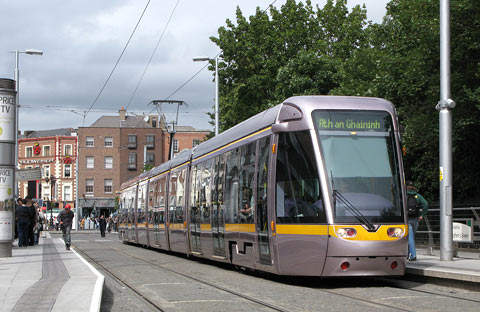
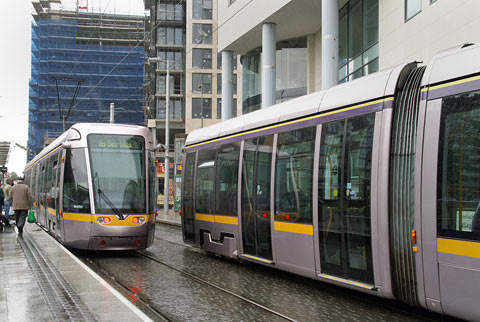
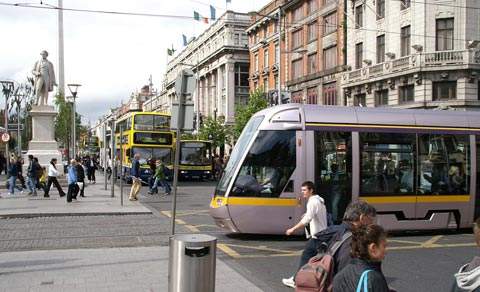
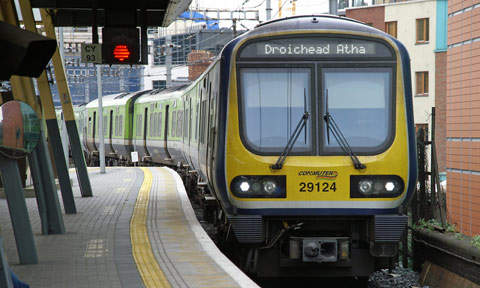
Heavy investment is being made in Dublin’s transport systems, including an entirely new metro network. It will complement the already successful and expanding Luas tram network, and the Iarnród Éireann/Irish Railways DART (Dublin Area Rapid Transit) routes, which share tracks with mainline trains.
The new metro will use dedicated new routes for two lines in the first instance: Metro North and Metro West. The system will allow fast, frequent and reliable services for Dublin commuters, and create a fast and direct connection to Dublin Airport. The link is crucial to the Metro’s success, as the airport handles 20 million passengers per year, forecast to rise to 30 million by 2017.
Recommended Buyers Guides

As well as providing extra capacity, the Metro lines could remove 110 million vehicle kilometres from Dublin’s crowded roads.
The project
The Metro project is part of Transport 21, the Irish 2006–2015 infrastructure plan published in late 2005.
The first of the two proposals to be tackled is Metro North, with the Railway Procurement Agency (RPA) publishing route details in October 2006.
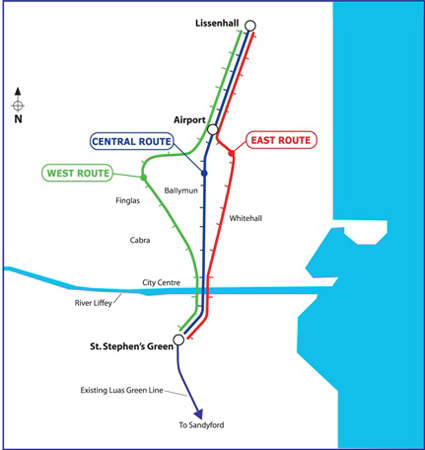
It will start at St Stephen’s Green to the south of the city centre, which is the also current terminus of Luas Green Line and a stop on the projected Interconnector (DART Underground), and run to the Lissenhall area in the north via Dublin Airport and Swords.
Metro North was initially expected to cost ²2.4bn to put into operation, although that is now thought to have increased substantially. A 2012 opening date was originally indicated in Transport 21.
The RPA published the Metro West “Emerging Preferred Route” in July 2007. The start and end points were established as Tallaght, a rapidly expanding community to the south west of Dublin and the western Luas Red Line terminus, and Metropark station near the airport, where it will link with Metro North. Trains are expected to start running by 2014.
The project is being financed through a public-private partnership, and is estimated to cost €6bn ($9bn). The European Investment Bank agreed to part fund the project in March 2010, providing €500m ($752m). This debt will be repaid by RPA over a 25-year period.
The contract for the project was awarded to Celtic Metro Group (Barclays Private Equity, Obrascon Huarte Lain, Mitsui, Soares da Costa, Iridium Concesionesde Infraestructuras, CAF and MTR) and Metro Express (Macquarie Capital, Global Via Infrastructuras, Allied Irish Bank, Bombardier and Transdev RATP) in July 2009. The project is expected to provide 4,000 construction jobs.
Infrastructure
Metro North will broadly follow established and intensively used traffic flows to best serve a mixed market, including commuters and visitors.
Like LUAS, both metro lines will have exclusive track use, albeit interconnecting at many locations to provide journeys using a mixture of trams, bus, metro, DART and main line rail services. Contrasting Dublin Metro will use 1,435mm gauge track.
Most of Metro North is likely to be underground, with the final section to Ballymun and the airport at ground level or above. The RPA proposes to use a combination of cut and cover and tunnel boring machines to complete the project in a reasonable timescale, as deployed for the Madrid Metro.
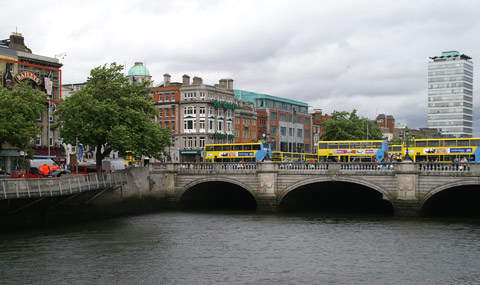
About half of Metro North will be underground (mainly at the southern end) with the remainder running at ground level or on elevated structures. It will have 15 stations, including Dublin City University, O’Connell Bridge (for transfer to Luas Red Line Abbey Street), Mater (Hospital), Swords and Dublin Airport.
A 20-minute running time is projected from St Stephen’s Green to the airport, with a further ten minutes to Swords. Following a public consultation in 2007, it was decided to add a station at Parnell Square, north of the city centre. Park-and-ride sites where road corridors meet metro lines are also planned to encourage the use of public transport.
Metro West’s crescent route around the western edge of the city will offset obstacles created by Dublin’s largely radial pattern of routes for those who do not otherwise need to travel via the centre. Designed to allow for longer-term upgrade to resemble Metro North, it will be approximately 24km (14.9 miles) long, with around 20 stops that are expected to resemble those of the Luas lines. Again the RPA envisages park and ride sites by busy commuter roads.
The long-term vision is evident with Metro West’s future proposed stops. A stop at Harristown would serve a possible third airport terminal an, similarly, one at Belgard would enable transfer to the proposed Luas Red Line A1 Citywest extension near Tallaght. With peak time four-minute headways and promising end-to end journeys from Tallaght to Dublin Airport in under an hour, projected ridership is 20 million per year.
Rolling stock
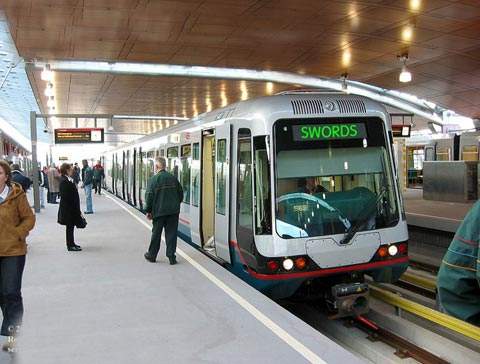
The RPA identifies the nature of Metro North as faster and with higher capacity than Luas, referring to existing systems in Porto and Cologne, although some artist impressions are based on Rotterdam. Metro West rolling stock is likely to be more of a light rail/tram nature.
Both lines will feature high-density vehicle types to cope with the large volumes of passengers expected, and cater for disabled access. Services are expected at four-to-five minute intervals, with the capacity to increase frequency as passenger numbers grow.
Plans have been published for a Metro North depot beyond the Lissenhall terminus. Metro West will need one depot, with Abbotstown and Silloge cited as possible locations.
Signalling and communications
The signalling system will be operating on a ”line of sight basis”. The block signalling system in the tunnels will provide information to the driver through signals. As a result the driver will be able to predict the situation ahead.
The communications system also features an automatic train protection system (ATP) and an automatic vehicle location system (ALVS). The ATP system will not allow the drivers to exceed their speed limits while travelling through tunnels, while the ALVS will determine the vehicle’s location on the line. Related information will be displayed on CCR.
The future
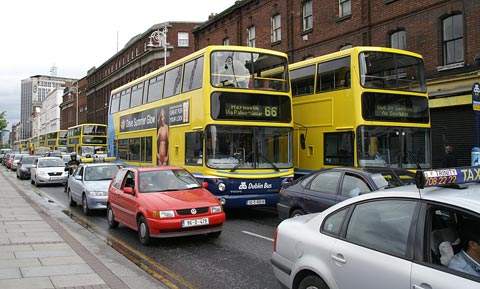
The originally projected 2012 and 2014 openings of Metro North and West respectively represented another big step towards decreased reliance upon a road system clearly unable to cope in terms of volume, speed or controlling pollution. This move towards a more comprehensive urban transit system will be further promoted by the Integrated Ticketing System and the Dublin Interconnector line projects.
The RPA confirmed four qualified bidding groups for the Metro North Public Private Partnership who will design, build, fund, maintain and operate the line over a 35-year period. These include representatives of Irish and overseas companies drawn from the fields of infrastructure, operations and rolling stock.
The Environmental Impact Statement of RPA has been approved by An Bord Pleanála.
