

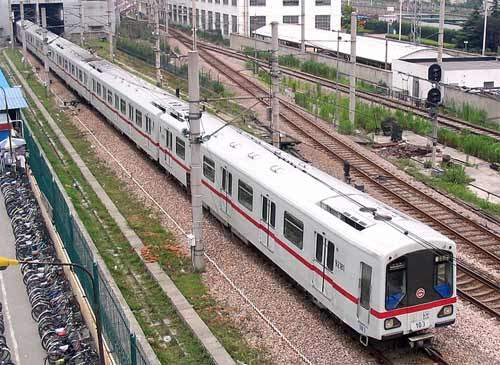
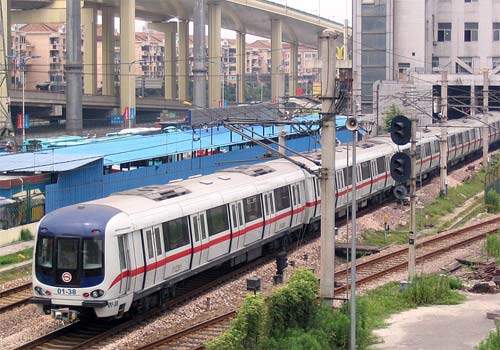
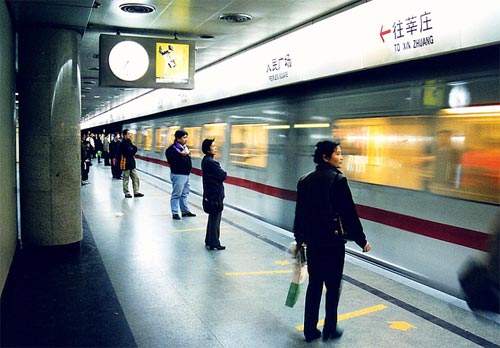
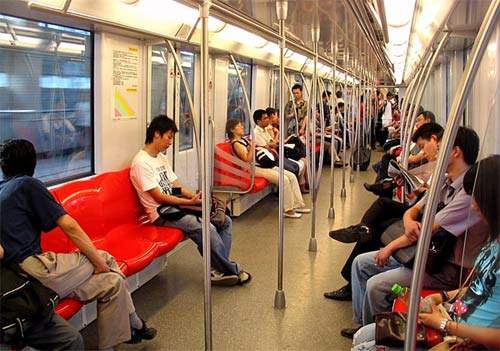
China is midway through a highly ambitious project to build an all-new metro system in Chengdu, the country’s tenth largest city. High-speed, light rail and metro rail projects are all high-priority in China, which is particularly keen to exploit the mass transit capacities of metro networks to reduce significant congestion and pollution issues that exist within many major population centres.
Recommended White Papers
Recommended Buyers Guides

Chengdu is the capital of Sichuan Province of western China, an important commercial centre with a population of 11 million. It lies 1,500 miles west of China’s eastern seaboard and has heavy rail connections to 12 major cities in China, including Beijing.
The metro project was incorporated into infrastructure planning by the local government in 2001, with the combined aim of upgrading urban infrastructure and improving the standard of living.
The project
Construction of the Chengdu metro began in December 2005. Five lines will be built in the first phase of development, covering 126km (78.75 miles) and 116 stations. Eleven of the 116 will be interchanges between routes.
The network is being designed to cope with massive passenger demand. By 2020, it is expected to carry 13.1 million passengers every day, rising to 14.1 million a day by 2035.
Trial operations on Line 1 commenced on 10 September 2010, while formal operations began 27 September. Line 2 is currently under construction and Line 3 is being constructed in three phases. Phase one entered into commercial service in July 2016.
Preliminary assessment for the construction of Line 4 was passed on 12 March 2010 and is being built in two phases. Phase one opened in December 2015, while phase two entered into service in June 2017.
Infrastructure
The umbrella project is the establishment of seven new metro lines over the next three decades, although initially five have been devised, all radiating from the city centre.
Line 1 was approved by the State Development Planning Commission, and divided into two sections; phase one runs 15.1km (9.4 miles) between Honghuayan and Shiji Square, as well as costs $783m to build.
The first phase of Line 1 covers 18.5km from Shenxian Lake to Century City. The route serves 16 stations, has a depot at Huayang, two main sub-stations, ten traction substations and one control centre. There is also an interchange with Chengdu’s north and south railway stations.
A minimum curve radius of 400m has been employed where possible, although certain restricted sections have 300m radius curves. The maximum gradient for the route is 35%. The track uses 60kg/m rails laid to standard 1,435mm gauge, allowing a maximum operational speed of 80km/h (50mph). The power supply is 750V DC with third rail collection and running rail return.
The project has set a national record by applying natural ventilation techniques in the construction of a subway from the southern third ring road to the new international exhibition and convention centre. Ventilating outlets are built every 30m along the subway to allow fresh air and meet fire emergency needs. In addition, supplementary ventilation equipment is also installed. Natural ventilation is considered as an ideal way to save energy and reduce the construction cost.
Advanced communication systems have been installed on the platforms and in the halls of every Line 1 station. These systems include 46in x 52in high-definition electronic display terminals, which provide information on train times, news and other multimedia.
The start and finish points of the remaining lines in the programme have already been decided:
Line 2 will run from Honghe Downtown District to west section of the Third Ring Road at the Chegdu-Dujiangyan bus station – 50.65km total, with 15 underground stations and 11 elevated stations.
Line 3 will run from the Liujiian district to the Liulichang district – 49.28km total, with 11 underground stations and eight elevated stations.
Line 4 runs from Chengdu-Nanchong Southwest bus station to the Zhuzigiao District – 38.9km total, with 11 underground stations and eight elevated stations.
Line 5 will run from West Chengdu-Yaan Expressway to Chengdu University – 24.63km total, with 11 underground stations and two elevated stations.
The Line 6 main line will run from Shawan to Sihe – 22.05km total, with 11 underground stations and two elevated stations.
The Line 6 branch line will run from Bolichang to Shuangliu Airport – 15.11km total, with four underground stations and four elevated stations.
Line 7 will run from Shengtai to Longtandong – 41.93km total, with 17 underground stations and five elevated stations.
Rolling stock
Similar to other modern metro systems in China, the Chengdu network is destined to receive Type B rolling stock from the Changchun Car Company, a Chinese builder.
The cars are 2.8m-wide and 19m-long, formed into three-car sets and later to be expanded five-car trains. The average train speed during each journey will be 35km/h, although the maximum speed will be 80km/h (50mph).
Each three-car train will have air-conditioning and capacity for 1,200 passengers. A fleet of 22 formations entered traffic at the opening of Line 1.
Contractors involved
Alstom was awarded a contract to supply traction equipment for Lines 3 and 4 of the Chengdu metro.
Casco has been appointed as the signalling system contractor for lines 4 and seven.
Signalling and communications
Chengdu Metro will be a highly sophisticated network, equipped with Automatic Train Control, Automatic Train Protection, Automatic Train Stop and Automatic Train Operation. In addition to the on-train/track systems, fire detection and automatic fare collection systems will also be installed.
The future
The Chengdu project will become the seventh metro in China, following the pioneer network in Beijing and others in Tianjin, Shanghai, Guangzhou, Nanjing and Shenzhen.
It is aimed at aiding the redevelopment of central Chengdu by turning the city centre over to commercial trade and finance industries, encouraging the old residential areas to relocate in due course.
The anticipated passenger loadings are extremely high and take into account the massive population growth taking place across the region.
