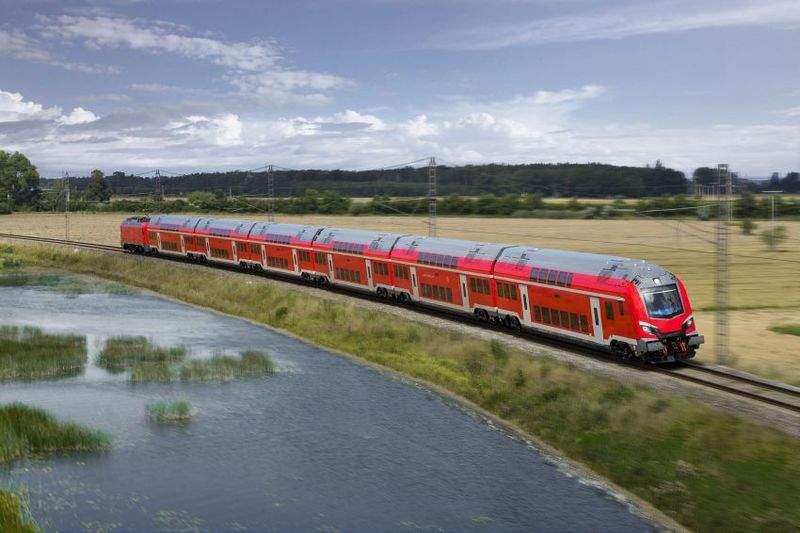
Škoda Transportation has secured TSI certification from the German notified body Eisenbahn Cert for the 109E3 locomotives and bi-level high-speed coaches.
Scheduled to operate between Munich and Ingolstadt-Nuremberg route, the six high-capacity bi-level trains were manufactured by the company for German operator Deutsche Bahn Regio.
Go deeper with GlobalData

Discover B2B Marketing That Performs
Combine business intelligence and editorial excellence to reach engaged professionals across 36 leading media platforms.
Škoda Transportation chairman and CEO Petr Brzezina said: “By issuing this certificate, we celebrate the extraordinary success of the homologation process, which we expect to be finalised at the beginning of 2019 when the train should be finally approved.”
“Completing this technically and financially challenging project is the priority of the new board of the company under the new owner, investment and financial group PPF, and will in the future support our business plans on the European market.”
The fleet of push-pull trains will replace InterCity units next year.
Equipped with a control car, end wagon, four wagons and Škoda Emil Zátopek 109E3 locomotive, trains will travel between Munich and Nuremberg in one hour 45 minutes at a maximum speed of 190km/h.
Each vehicle features 676 seats, with separate spaces for passengers with reduced mobility. They also feature a special pressure-tight cabin for passing other trains in tunnels at high speeds.
The trains also offer multifunctional pram and bicycle areas, Wi-Fi services and barrier-free entrances from the platform.
Škoda Transportation Sales vice-president Zdeněk Majer said: “The supply of the trains has been postponed by more than two years.
“The main reason for the delay was the challenging development of pressure-tight wagons, as well as tests of whole trains, which will be in close proximity to ICE trains moving at a speed of 300 km/h in normal operation.”


