
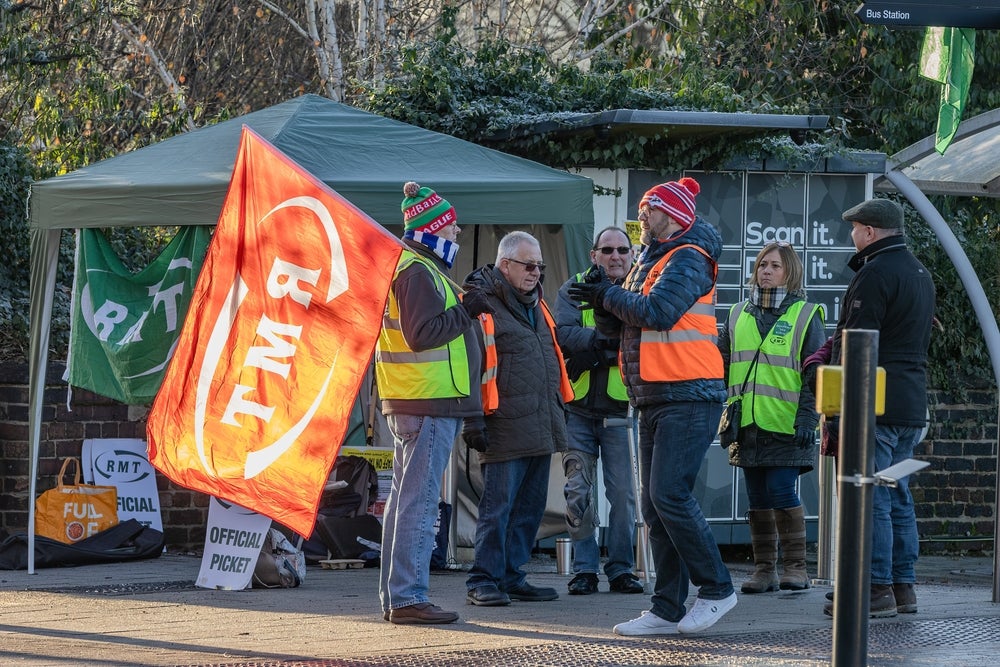
As the UK Parliament gears up for its next session following the State Opening, the Conservative government has announced its intention to pass so-called Minimum Service Level laws which would affect the railways, if passed.
The legislation aims to “mitigate disruption” in case of future strikes and comes after 18 months of dispute and industrial action on national and regional rail.
Go deeper with GlobalData


Discover B2B Marketing That Performs
Combine business intelligence and editorial excellence to reach engaged professionals across 36 leading media platforms.
UK Government ministers said the law will “bring [the UK] into line with countries like France, Spain and Germany.”
The Prime Minister’s office explained: “For train operators, it will mean the equivalent of 40% of their normal timetable can operate as normal and, in the case of strikes that affect rail infrastructure services, certain priority routes can remain open.”
Both railway unions and fact-checking organisations have questioned the proposed law.
General secretary of the Rail, Maritime and Transport Worker’s union (RMT) Mick Lynch said it was an authoritarian attack on the rights of working people.
Lynch added: “Even the government’s own impact assessment has said that the legislation could lead to more strikes so instead of attacking workers and their trade unions the government should spend its time trying to resolve disputes not inflaming them.”
The Trade Union Congress (TUC) added the move would be both “misguided” and “draconian”.
But the government has insisted that groups including the International Labour Organisation (ILO), a United Nations agency, support the law.
But that’s not the full picture. While the ILO does support certain provisions of minimum service levels, it is clear the rules must be “appropriate” and agreed by both employers and employees.
According to Full Fact, an independent UK fact-checking organisation, the ILO said: “the determination of minimum services and the minimum number of workers providing them should involve not only the public authorities but also the relevant employers and workers organisations.”
Under currently tabled plans, the setting of such minimum levels would be the responsibility of the government minister responsible for the sector.
In a secondary move, which is sure to anger union leaders, the government said it would launch a consultation on removing regulations which stop companies employing agency staff to cover industrial action.
Transport Minister Mark Harper said the law would protect customers and workers’ right to take action.
“Minimum Service Levels will help address this by allowing the rail industry to plan ahead to reduce disruption for passengers while ensuring workers can still exercise their ability to strike,” he said.


