

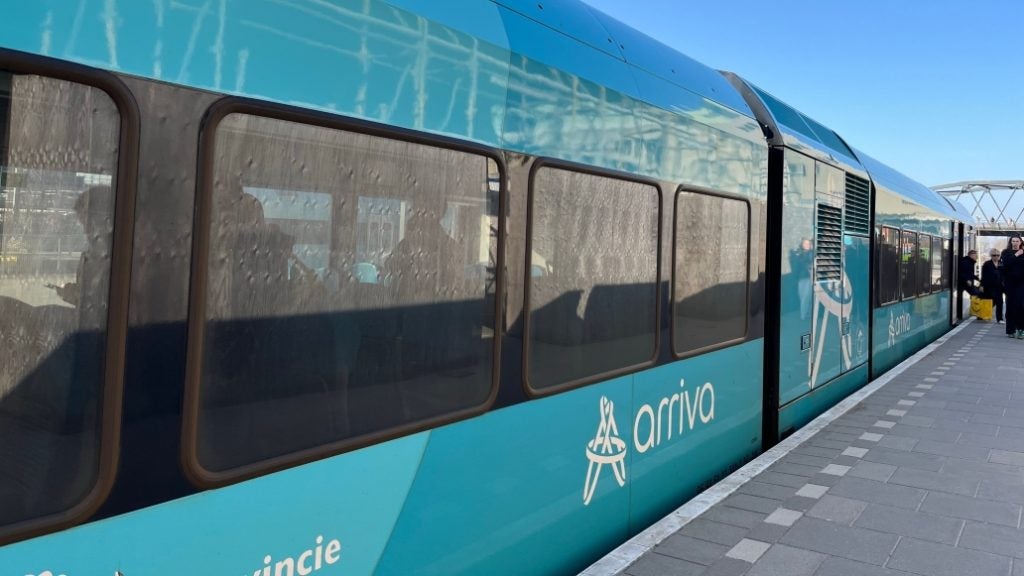
Nearly two years after a tender process for hydrogen-powered trains was dropped (without a single bid), and more than five years after Alstom and the Province of Groningen agreed that hydrogen was a viable "full-fledged sustainable alternative to the current diesel trains," the dream appears to be over.
Instead of hydrogen, the northern region of the Netherlands said it will instead use battery-electric locomotives to achieve its zero-emission railway aim.
The new plan is to follow its provincial neighbour Friesland, which earlier this year made €2.2m available to "explore partial electrification" of its railways. This would rely on battery-electric locomotives that can charge quickly when connected to catenary lines at stations. This is known as a discontinuous electrification.
"We will focus on (partial) electrification with (battery)electric trains. This is in line with the plans of the Province of Friesland. Next year, we will investigate which lines should be partially equipped with overhead lines and which lines should be fully equipped with overhead lines," Wessel Feenstra, Groningen's zero emission railways' project leader, told Railway Technology.
Feenstra added that the Province is working with the Department for Infrastructure and Water Management and the railway infrastructure manager ProRail to plan which lines would be electrified and where cables would be placed.
The current commissioning period in Groningen and Friesland runs until 2035, and the question of how to power its railway network in the next period led to the decision to focus on battery-electric rolling stock.
In 2020, when Alstom ran successful tests of the Coradia iLint hydrogen train, it declared the system was commercially and practically viable.
Alstom Benelux managing director Bernard Belvaux said at the time: “The tests in the Netherlands demonstrate how our hydrogen train is mature in terms of availability and reliability, providing the same performance as traditional regional trains, but with the benefit of low noise and zero emissions. It is also easy to integrate in an existing fleet and is compliant with all safety regulations. The Coradia iLint hydrogen train is a reliable emission-free train ready to help transport us to a carbon-neutral Europe.”
But when it came time to offer a tender, the industry's response was muted. It was reported at the time that the size of the proposed order was too small to gain manufacturers' attention. Only four trainsets were proposed. When Deutsche Bahn ran similar tests, it ordered 27 units with a bill of €500m.
"It has been concluded that the market for hydrogen (trains) is not expected tot reach the desired level to guarantee a stable and affordable service from 2035 onwards. Meanwhile the battery technology is developing rapidly," Feenstra added.
A provincial government document seen by Railway Technology explained the decision further: "The ever-increasing range, falling costs, and increasing maturity of the technology mean that battery trains are often preferred over hydrogen trains in neighboring countries and have now become an option for our railway lines."