

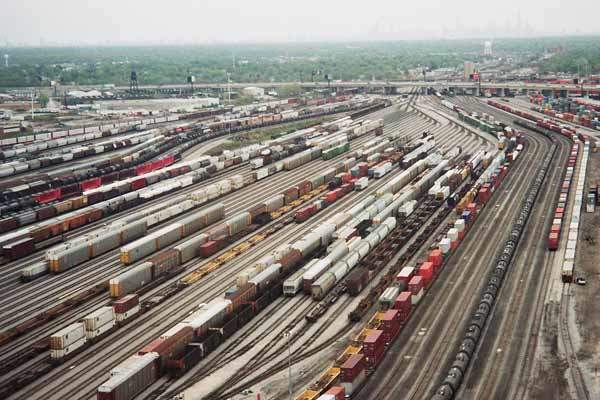
Greater Chicago is the third largest of the US metropolitan statistical areas, extending into the states of Illinois, Indiana and Wisconsin. The city owes its emergence as one of the country’s main economic and population centres to a concentration of railways that served the interior, notably for agricultural production and for transfers via Great Lakes shipping.
Public transport in north east Illinois is overseen by the Regional Transportation Authority (RTA), via three service boards: for rail rapid transit and city buses – Chicago Transit Authority (CTA); for commuter rail – Metra; for suburban buses – Pace. Although US long-distance rail travel is vastly reduced over former years, the largely sub-surface Chicago Union Station remains a focal point of Amtrak services, which account for just over 10% of rail passenger numbers there.
Recommended Buyers Guides

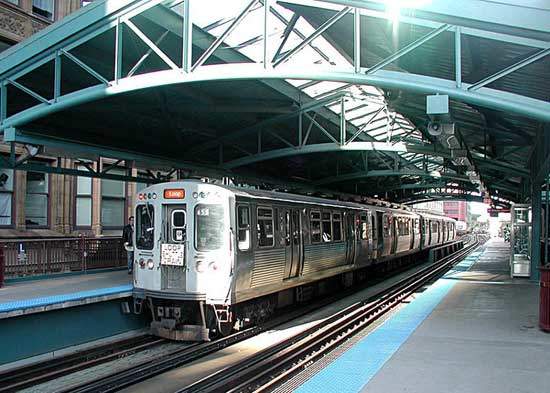
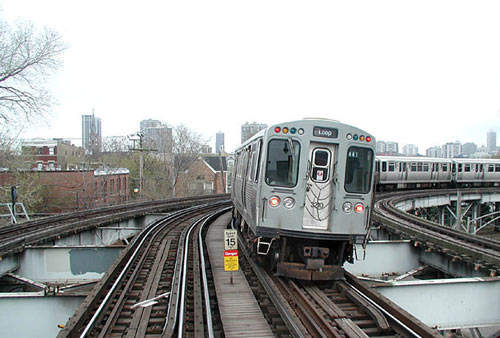
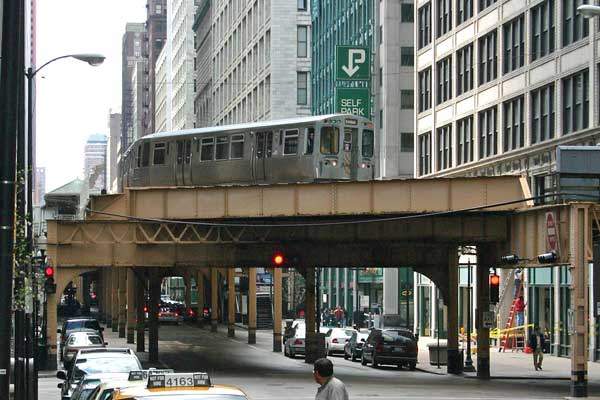
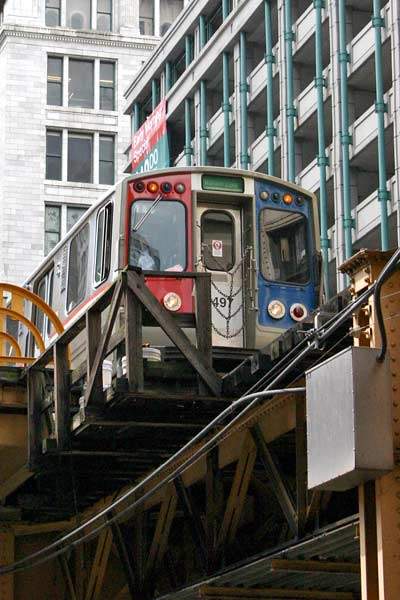
The present eight-route 222-mile (355km) rail system dates back to 1892. The CTA public sector agency was formed in 1947, absorbing the Chicago Rapid Transit Company and Chicago Surface Lines that had previously taken over many rail companies. A high proportion of routes running on prominent metal viaducts led to it becoming known as the ‘L’ or ‘El’ – for elevated.
The high-level, two-mile, nine-station circuit formation in the downtown business area that allows for turning several routes is associated with the district termed ‘The Loop’, an allusion to the closed streetcar line layout there.
Chicago’s transit system is the second largest in the US measured by individual journeys, but capacity is restricted by its age and updating projects are a major challenge.
The project
Modern railway operating practices, higher-spec equipment and raised expectations placed heavy demands on the CTA. Into the 1990s train ridership was declining and the infrastructure needed investment to cover a maintenance and renewal backlog. Cost cutting included closures to enable greater emphasis on services where demand was sustained and deemed essential for the area. The demand trends varied markedly around the network, with some suburban districts experiencing very high growth despite an overall decline.
In common with many large cities, population growth has been most marked in the suburbs, with some decline in inner city areas. With CTA and Metra rail routes mainly fanning over the hemisphere of land west from the Downtown area near the lake front, travel demands between the suburbs have tended to be met by road use in spite of traffic congestion.
Infrastructure
The 1,435mm network now wholly with 600V third rail supply has 144 stations, with 18km (11.25 miles) of route underground, 62km (38.75 miles) on elevation – mostly in the city centre, which has 89 stations. Both international airports, Midway and O’Hare, are served by CTA rapid transit.
The busiest CTA of the colour-designated rail routes, Brown Line serves the north west of the city and turns on The Loop. Reflecting the fortunes of the areas served, it experienced sustained passenger growth, 83% from 1979 and 27% from 1998.
In April 2004 approval was given for federal government support for the long-term $530m ‘Brown Line Capacity Expansion Project’. The project, completed in December 2009, allowed for the use of eight-car trains (the previous limit was six cars) and included the rebuilding 18 stations.
Opened in September 1969, the north-south Red Line infrastructure had reached its productive limit. CTA has invested $282.6m for a more reliable and efficient operation involving power, signalling and communication upgrades on 14km (9 miles) between Cermak-Chinatown and the 95th/Dan Ryan terminus.
In November 2011, an investment of $1bn was announced for the upgrade of the Red and Purple Lines; $646m of the funding will come from the state’s Illinois Jobs Now programme, and the rest from other state and federal funds.
The upgrade project is expected to create 2,700 jobs. It will include rebuilding of deteriorated tracks and stations, and the installation of power systems. The work will begin in 2012 and continue for three years.
The Blue Line had deteriorated to the point that half its length was subject to 15mph (24km/h) speed restrictions, as opposed to full line speed of 55mph (88km/h). $482m is being invested in this line which runs on a 100-year-old elevated route.
In September 2003, to lift track-related speed restrictions towards O’Hare Airport, CTA awarded a contract for renewals over 19 miles (30.5km) of the Blue Line. In 2008 CTA reported an overall 8.3% increase in rail ridership over the previous year.
Rolling stock
CTA operates a fleet of around 1,200 metro cars. They are generally formed into six or eight-car sets according to demand and line capacity.
About 246 cars in the 3200 Series from Morrison-Knudsen, which were delivered between 1992 and 1994, prompted by the opening of the Orange Line. Between 1976 and 1978 Boeing-Vertol supplied the 200-car 2400 series. Bombardier was responsible for the 150 2200 series (also due for withdrawal in 2012) and the most numerous fleet type, the 600-coach 2600 series of 1981-1987.
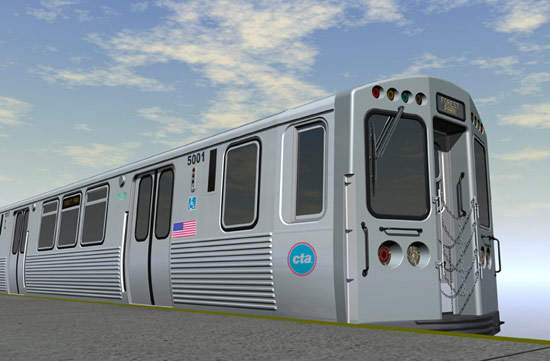
In May 2006, an order was placed with Bombardier for 706 new cars, provisionally the 5000 series, with an option for a further 300. These are intended to replace the older vehicles.
The first delivery of ten cars was made in April 2010, and debuted in November 2011 on the Pink :ine. In December that year, CTA has decided to take 40 of the 5000 series cars off the service due to manufacturing defects.
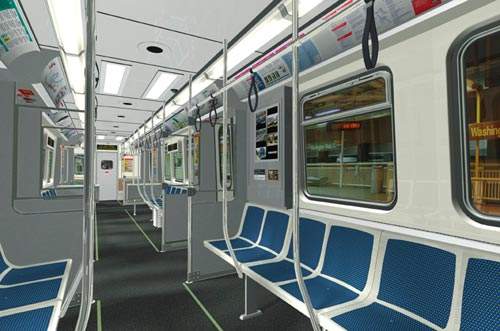
The new cars cost $1.137bn, funded by two CTA bonds and federal funds. They feature aisle-facing seats to allow more passengers to board, alongside internal information displays and improved security. Fitted with regenerative braking and self-levelling equipment for disability legislation compliance, the use of AC traction motors is a change from the traditional DC equipment currently in CTA use.
In 2008 CTA began testing six cars reconfigured at a unit cost of $10,000 on the Brown Line, with fewer seats and more supports for standees to increase overall capacity. Earlier projections for cars with no seating for peak hour use were abandoned due to the weight restrictions.
Signalling and communications
The Red and Blue Lines use a two-way in-cab signalling system, together with on-track equipment and control rooms. Fibre optic communication cables have been laid to connect all stations with the CTA centre. In January 2007 a contract was signed to replace train control and signalling on the crucial Loop lines over a three-year period. Two CTA routes provide a 24-hour service.
In December 2011, 1,800 security cameras were installed at 78 CTA stations.
The future
A fundamental problem for CTA rail services is one shared by other publicly funded US transit systems; rising demand occurring after years of decline and reliance upon investment made many years earlier. By European standards, the Chicago region’s two rail systems lack interchanges. The problems caused by this have been accentuated by late 20th century growth largely being in the suburbs.
A long-term project estimated to cost $1.1bn to tackle these issues is the Circle Line, which is currently under progression. In this around 7 miles of new track could connect existing infrastructure to form an ‘inland’ mainly north-south line that would cut across the radial CTA and Tetra routes to greatly increase interchange opportunities. It is expected to have a ridership of ten million.
The Circle Line plan was published in 2002. It is estimated that the project would be completed in 10-15 years.
