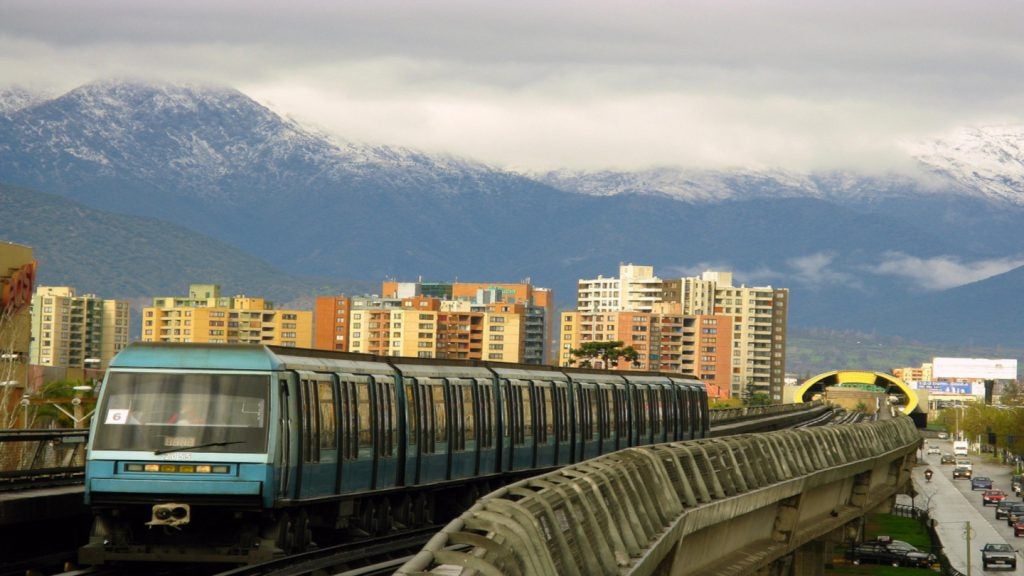


Metro Line 5 is the first fully automated, driverless, urban light rail system in Milan, Italy. It is a 13km-long subway that operates between Bignami and San Siro Stadium passing via the Repubblica area at Garibaldi station. The route features a total of 19 stations.
Known as Purple line, the line is being developed in two phases. Phase I consists of 6km-long underground track featuring nine stations between Bignami and Garibaldi. The first phase was under construction since 2007.
Recommended White Papers

Recommended Buyers Guides

The first section between northern Bignami terminus and Zara station was opened on 10 February 2013, while the second section between Zara and Garibaldi was opened on 1 March 2014.
A special purpose venture called Metro 5 has been created to carry out the project. It is a joint venture of Astaldi (€440m), Ansaldo STS (€105m), Ansaldo Breda (€51m), state metro operator Azienda Trasporti Municipalizzata (ATM) and Alstom. The consortium is led by Astaldi.
Already a concessionaire for Phase I of the Metro Line 5, the consortium signed a new contract with the Municipality of Milan in February 2011 for a further 7km extension from Garibaldi station to San Siro Stadium in the west. The €872m contract involves design, civil and technological works.
The third section consisting of Domodossola FNM, link to Ferrovie Nord, Lotto link to line M1, Segesta, San Siro Ippodromo and San Siro Stadio opened on 29 April 2015.
The project is expected to be fully completed by the end of 2015 with the opening of Tre Torri station.
Metro 5 will operate and maintain the new stretch for a period of 25 years and seven months from the date of completion.
Project details
The Metro Line 5 extension was approved in July 2010. The 7km route is fast-tracked by performing excavation activities on two different fronts simultaneously using four tunnel boring machines rather than the original plan of using two TBMs. The project is expected to be completed in 57 months before the opening of EXPO 2015.
Astaldi is the general contractor and is performing all the construction works at an investment of €440m.
Ansaldo STS is providing the electrical systems based on those already in service on the Copenhagen Metro. The rolling stock is being supplied by Ansaldo Breda under a €35m contract signed in June 2006. It will be used both on the Phase I and the extension.
The 12-train fleet will serve Line 5 at a headway of 3min during peak hours. The passenger capacity of the entire Metro Line 5 (Bignami to San Siro Stadium) is estimated to reach 25,600 passengers an hour, in each direction at a headway of 75s.
Milan Metro finance
The extension is being financed partly by the Ministry of Infrastructures for up to €391m and Milan Municipality for up to €83m. The remaining €398m will be sourced through private funding.
The consortium has also raised €294m in loans to finance the project with the expectation of revenues more than €1.3bn during the operating period. It is seeking financial advisory services from a US-based consultant Cohen & Company.
Infrastructure for the purple line extension
The stations have 50m-long platforms capable of accommodating four carriage trains. All the stations are equipped with automatic doors.
Stations are permanently staffed. The onboard personnel is in charge of duties such as passenger assistance, checking tickets and supervision.
Signalling and communications
The signalling and automation system on Metro Line 5 is in compliance with the CENELEC standards.
The line is monitored and controlled from a central control room. The signalling system enables routine and emergency communication within the stations and trains.
Rolling stock
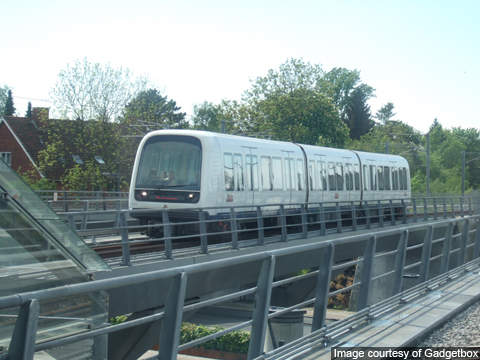
The fleet consists of three-car train sets designed by the Giugiaro Design team for Ansaldo Breda.
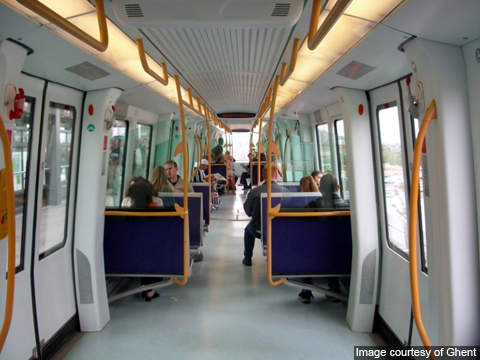
The train has seating capacity for 100 passengers and space for 200 standing passengers. The carriage has wall-mounted seats, so the floor is free of support legs, enabling easy cleaning. Four large flex zones at the sides with folding seats are available for wheelchairs, prams and bicycles.
Each car is equipped with two electronic information display boards showing the time, next station, train connections and other relevant messages. A calling point and CCTV camera are equipped on each door.
CCTVs assist the control staff to monitor few selected areas in the train. When a call is made from the call point, the system automatically switches to the camera and shows the person using the call phone.
Each car features six automatic sliding doors, and a flashing light and an audio signal precede the closing of the doors to warn passengers.
The trains run at an average speed of 29km/h and a maximum speed of 80km/h on the line.