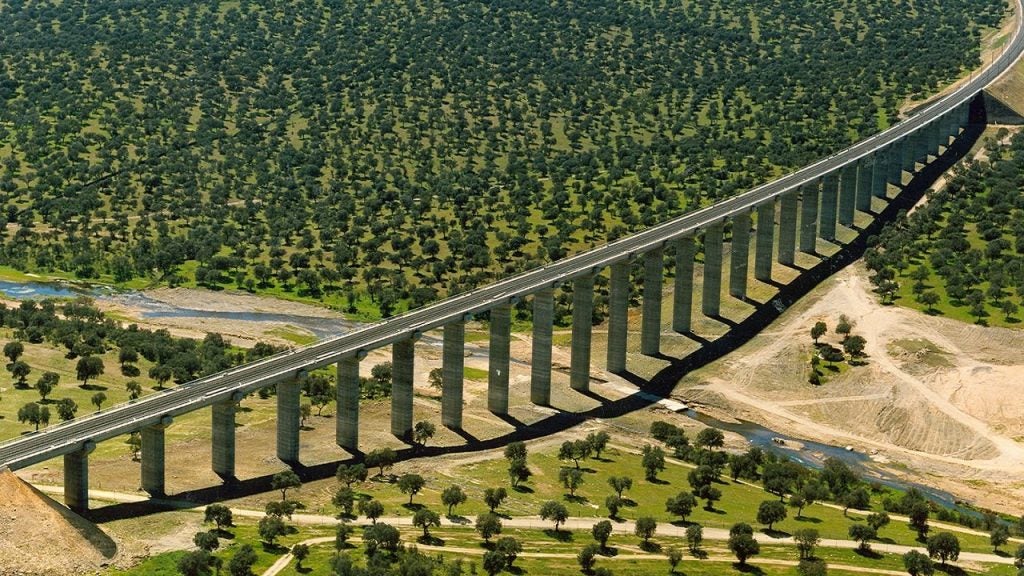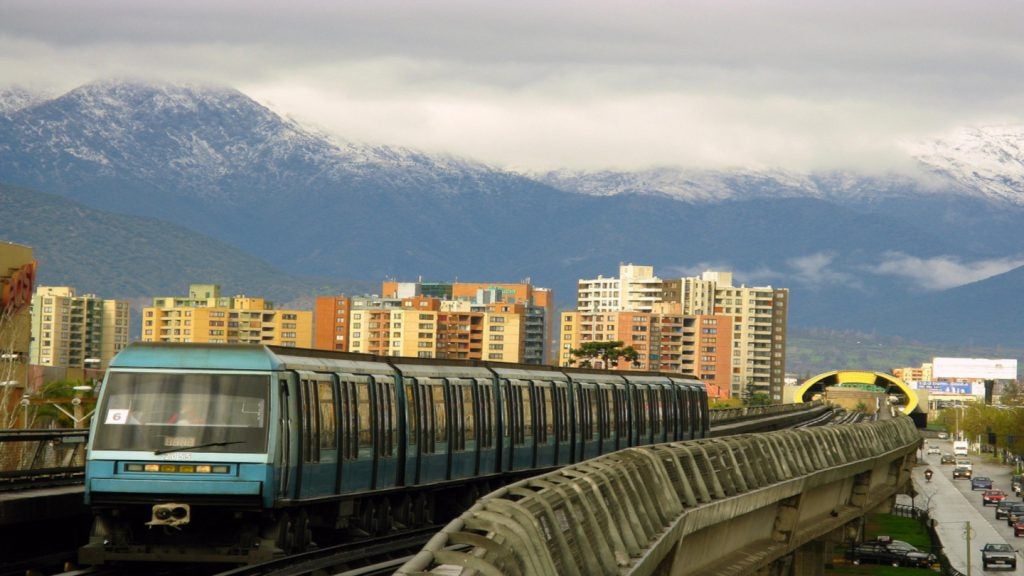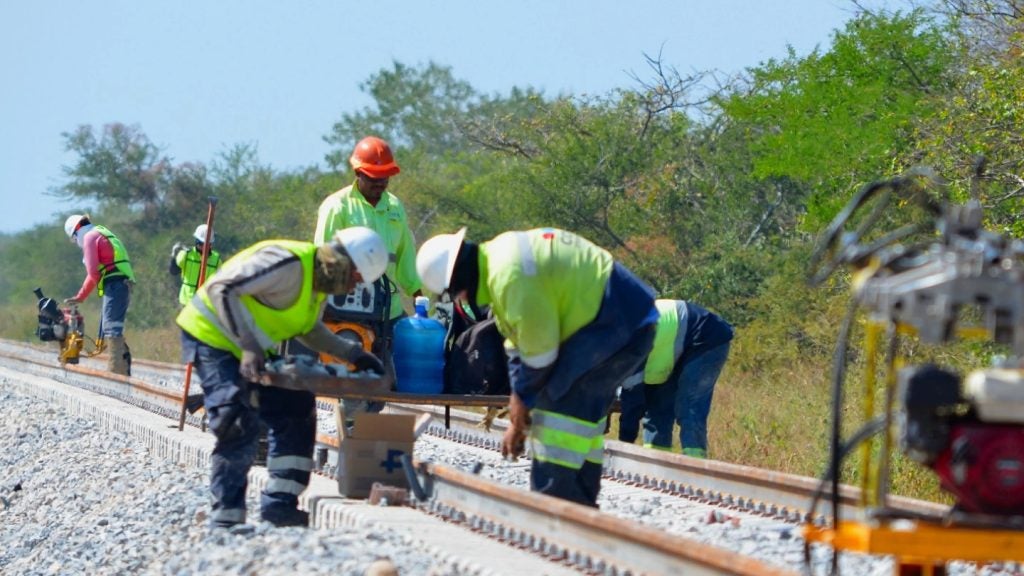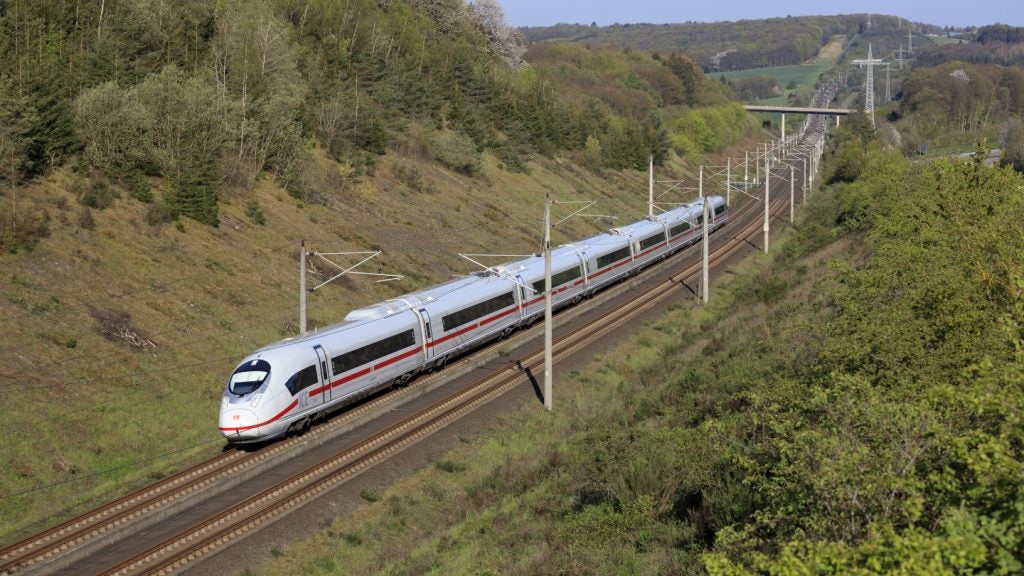

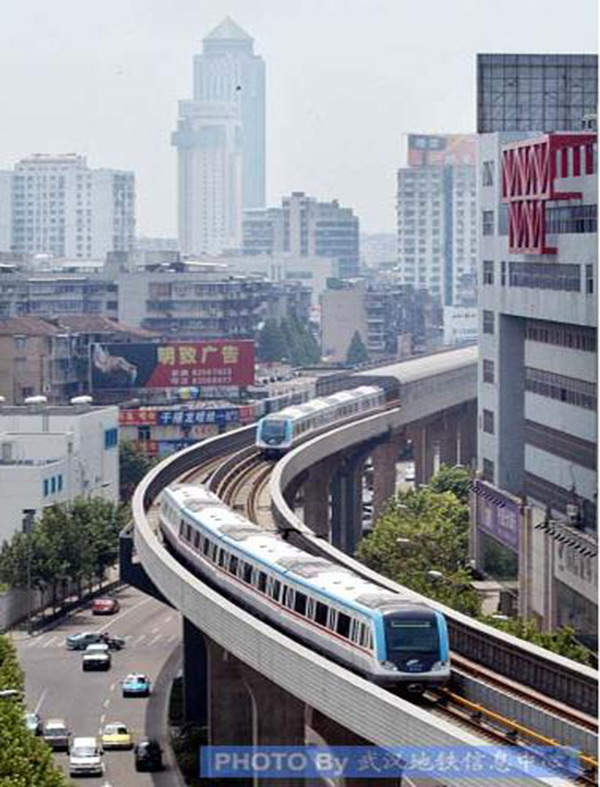
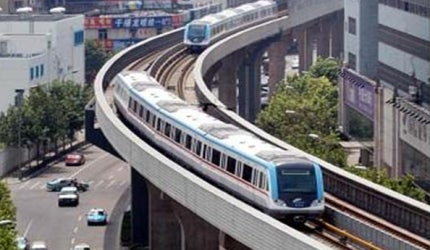
The first metro line in Wuhan, the capital of the Hubei province of China, became operational in September 2004. Wuhan is located at the meeting point of two rivers, Han and Yangtze, and the main purpose of constructing the metro is to ease traffic congestion on the bridges across the Yangtze River.
Recommended White Papers
Recommended Buyers Guides
Operational since December 2012, line 2 of the metro is partly underground, whereas line 1 is completely elevated. The high-speed light rail project is managed by Wuhan Metro Group, and aims to provide a fast, safe, energy-saving and dependable mode of transport.
Wuhan Metro Group project
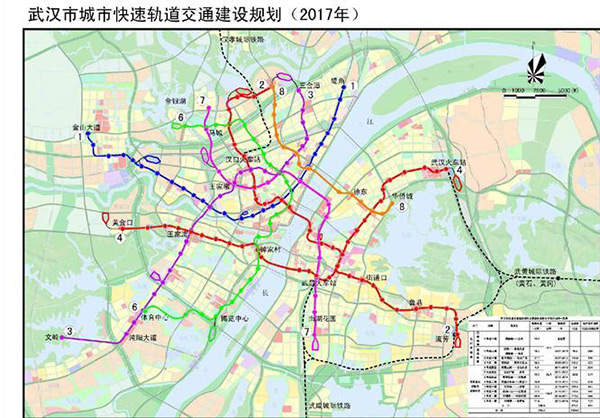
Wuhan Metro will have eight lines in total. Line 1 is 29km-long and covers 25 stations, carrying more than 220,000 passengers on 33 trains. The first phase of the line was opened in 2004, while phase II entered commercial service in July 2010. The phase III expansion, extending the north-east terminus to Hankou North Station, entered commercial service in May 2014.
The first phase of Wuhan Metro line 2 is 27.73km-long with 21 stations, linking the Hankou and Wuchang Districts. The dual-track, fully electrified line carries up to 800,000 passengers.
The first phase of Wuhan Metro line 3 is 30km-long with 24 stations, linking Zhuanyang and Hongtu Avenues. It was opened for traffic in December 2015 and is expected to carry 470,000 passengers.
The East Lake Tunnel became operational in December 2015. The 10.6km-long tunnel extends from Hongmiao Overpass to Yujiashan North Road.
The first phase of line 4, which connects Wuchang and Wuhan, opened in December 2013. Opened in December 2014, phase II runs under the Yangtze linking Hanyang, is 16.4km-long and covers 13 stations.
The first phase of line 6 will be 35.95km-long, linking Sport Centre South in thr Zhuankou district with Huanhu West Road in the Dongxihu district. Construction on the line began in August 2013 and is expected to be completed by the end of 2016.
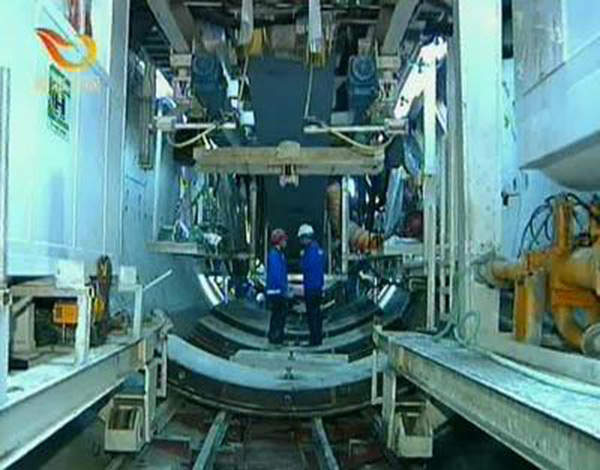
CREG was contracted to provide slurry tunnel boring machines (TBM) for Lot 10 of line 6. The metro system’s remaining lines, of which the master plans have been approved by the National Development and Reform Commission, are in planning stage, with service commencement scheduled by 2017.
Wuhan Metro Group line routes
Connecting Huangpulu with Zongguan station, the first phase of the line 1 was extended in 2010 to link Dijiao station to Huangpulu and Zongguen to Dongwudadao station. Line 2 connects Hankou and Wuchang provinces, while line 3 connects Tunyang Avenue with Hankou District.
Related project
Chongqing Metro, China
Chongqing Metro or Chongqing Rail Transit is a 75km rapid-transit system, serving the city of Chongqing in China. The metro commenced operations in 2005 and serves the needs of nearly 32 million people.
Line 4 connects the Wuchang and Wuhan Districts and was constructed in two phases. The first of which connects Wuchang and Wuhan railway stations, with the second phase starting from Wuchang rail station and ending at Hanyang Gold Mouth, passing via Zhang Zhidong Lu and Hanyang Avenue.
Line 7 will run between Tianhe Airport and South Lake, while Line 8 will connect Panlong Town with Yezhi Lake.
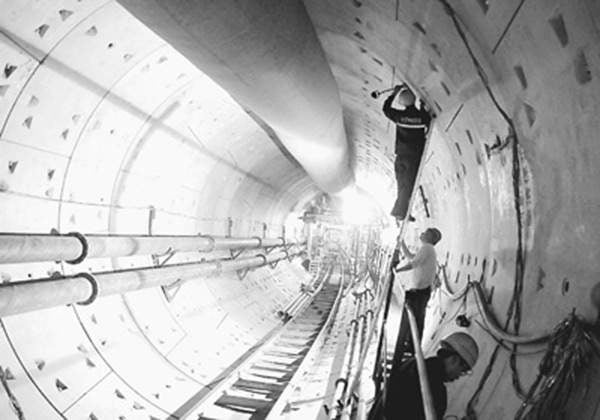
Tunnel construction on line 2 of the Wuhan metro
Line 2 was built partly in a tunnel under the Yangtze River, at a depth of 48m, and is located between the Fanhu and Hankou stations. The two ends of the tunnel have a gradient of 30%.
Construction of the tunnel was completed by February 2012, with excavation work done using a boring machine provided by NFM Technologies. It took three months to dig through the water-clogged clay.
Wuhan Metro Group rolling stock
Line 1 of Wuhan Metro uses 33 trains supplied by Changchun Rail Car and China South Rail.
The first phase of Line 2, which can be extended in the future to include eight car trains, consists of 30 trains, with a 100km/h maximum speed, 80km/h operation speed and average speed of 36.6km/h. Coaches have an anti-corrosive aluminium and steel body.
Mute Metro cars manufactured by CSR Zhouzhou Electric Locomotive are used as the rolling stock on Line 4. The traction motor and convertor system of the cars harness 20% of the noise, while the aluminium alloy honeycomb structure of the locomotives and double aluminium-alloy honeycomb floor reduce noise and make the coaches light and resilient.
Wuhan Metro Group signalling system
The signalling system for line 1 of Wuhan metro was provided by Thales. Other lines of the metro were installed with URBALIS 888 signalling system provided by Alstom.
Bureau Veritas along with Casco Signal provided signalling solutions and independent safety assessment service (ISA) for lines 2 and 4.
Wuhan Metro signed a contract with Thales Saic Transport (TST) for Line 3 signalling, in April 2014.