
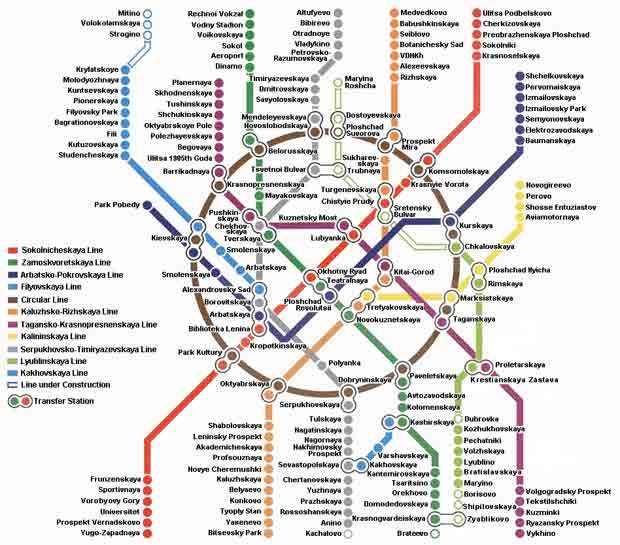
The Moscow Metro is one of the world’s busiest underground railway systems, and also one of the most extensive. However, the network is now under severe strain as nine million passengers use the 325.4km system every day, and there is an urgent need to reduce the amount of passengers at city centre interchanges, and on the current ring line.
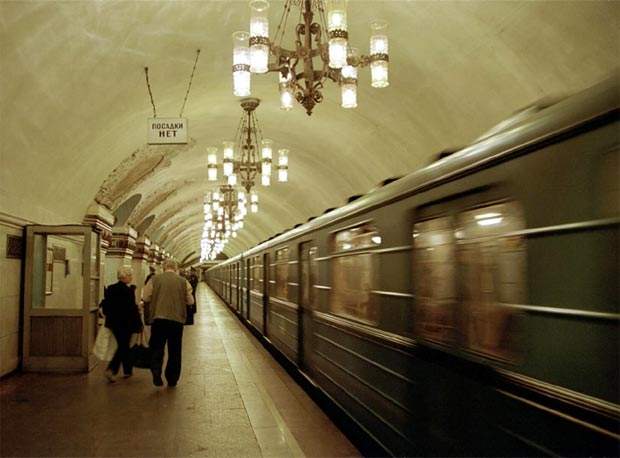
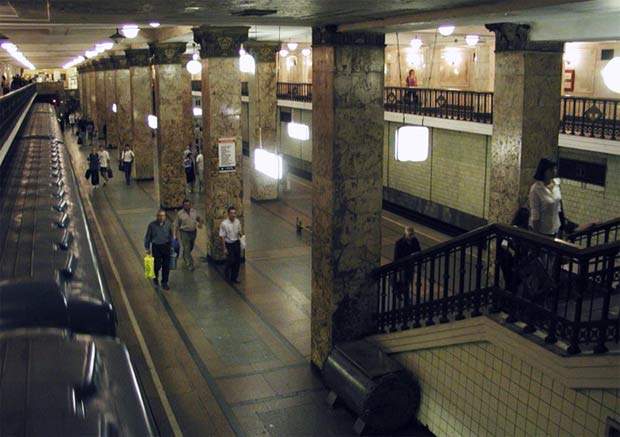
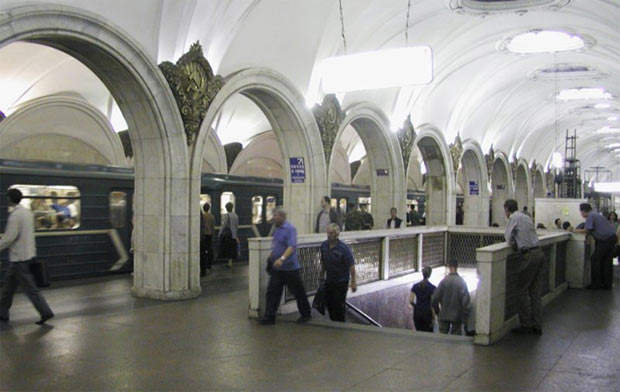
Far from being an ordinary railway, the stations are ornately designed, and home to a wide array of socialist realist art. The system has 194 stations spread across 12 conventional lines. They are spaced 1,800m apart, allowing trains to attain a speed of around 42km/h (26mph) between stops.
Recommended White Papers
Recommended Buyers Guides

The majority of the network is hidden deep below the streets of Moscow – there are a total of 70 deep level stations, 87 on a more shallow level, a further ten on the surface, and four on elevation.
However, even with such an extensive network of radial lines from the city centre to the suburbs and a connecting circle line within the city centre, the Moscow Metro still needs more routes in order to meet the demands of all the outlying suburbs and provide more flexible inter-suburb connections.
The metro system is continuing to expand to provide better services to the people. In December 2009, three new stations, Myakinino, Volokolamskaya and Mitino, were inaugurated. The Myakinino station is the first station of the metro to be situated outside Moscow.
Moscow metro project
The need to provide a convenient and quick transport option for the people of Moscow led to the development of the ring railway system. The project was originally conceptualised in 1901 and included the construction of a 67km elevated railway line and 16km of tunnels. The plan, however, did not materialise due to high costs and other factors.
In 1931, the government needed to address the growing transportation problems in the city and commissioned the construction of an underground railway system.
The main aim of the project was to provide cheap and adequate transportation to the people of Moscow. In 1932, the plan for the first line was approved and work on an experimental tunnel was initiated. The construction of another ten lines with a length of 80km was approved in 1933. In 1934, the construction of the first line was taken up in three stages and completed.
In June 2006, to meet the demands of inter-suburb travel, a second ring line around Moscow was proposed.
After receiving approval from the Moscow City Government, the start date for the project was set for 2008, and a 12km section between Mezhdunarodnaya and Savyolovskaya was to be built initially, with eight stations. The project was seen as an ambitious step but one that is needed as overcrowding was becoming a major issue. In 2006, the 0.5km Vystavochnaya–Mezhdunarodnaya section was completed.
The new ring line is expected to be built between 3km (1.9 miles) and 5km (three miles) further from the city centre than the present ring line, which is 20km long and primarily circles the centre of Moscow. It is envisaged that the new ring line will reduce the number of journeys made into the city to reach other outlying areas, providing interchanges with other lines radiating from the centre further out of the city. The new ring line is scheduled to be completed by 2018.
Metro line construction
Metrostroy, the company that built the entire Moscow metro, faced several difficulties while constructing the metro system. The company encountered different types of soil, underground rivers, limestone and quicksand while carrying out tunnelling operations. To build the metro system, Metrostroy used deep-level tunnelling and cut-and-cover procedure of construction.
About 9,013m of tunnels were constructed by cutting and another 887m were built with the help of mechanical shields. A further 3,251m were constructed using the cut-and-cover method and 4,220m using the open-cutting method. The part from Komsomolskaya to Biblioteka Imeni Lenina required deep-level tunnelling as the area contained several high-rise buildings and narrow streets.
Moscow metro infrastructure
The Moscow metro features safety systems such as automatic interlocking system, signalling systems and centralised traffic control. Other safety provisions include security signalling devices, fire extinguishing equipment and closed-circuit surveillance equipment with video recording. A modern ticketing system provides passengers with a range of options to travel in the metro.
Rolling stock
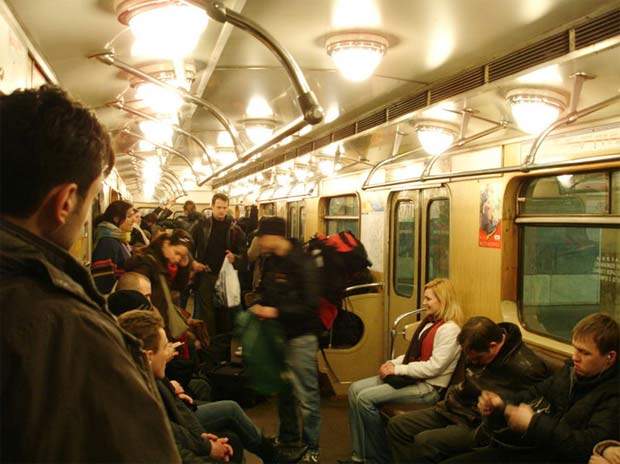
The Moscow metro uses two main types of metro car, the E-series and newer 81-series. They are the same as those used in other former Soviet cities, including St Petersburg, Budapest, Prague and Warsaw.
Different lines use varying lengths of trains to meet the passenger demands and frequency. Lines 2, 6, 7 and 9 have the longest trains with eight cars, whilst other lines use six or seven car trains. All vehicles are 19.6m long.
As is standard throughout Russia, the Moscow Metro uses 1,520mm gauge track, but unusually for a metro system employs a third rail for AC power at 825V.
On an average day, the metro operates 9,915 trains carrying an average of 53 passengers per car.
Moscow metro signalling and communications
The Moscow metro has an unusual way of making communication to passengers simple. The public address system has two operators, one male and one female. On the ring line, the male voice denotes trains travelling clockwise, whilst the female voice announces trains travelling anti-clockwise. On the radial lines from the city centre to the suburbs, the male voice announces trains travelling towards the centre and the female voice announces trains travelling out of the centre.
Trains can travel up to a minimum of 90 seconds apart using the present signalling system and achieve a relatively high speed between stops of 42km/h. At off-peak times, train frequency can drop to between eight and ten minutes.
Metro line routes
The 12 lines on the Moscow metro include: Sokolnicheskaya line (26.1km), Zamoskvoretskaya line (36.9km), Arbatsko-Pokrovskaya line (43.5km), Filyovskaya line (14.9km), Kol’tsevaya (circle) line (19.3km), Kaluzhsko-Rizhskaya line (37.6km), Tagansko-Krasnopresnenskaya line (35.9km), Kalininskaya line (13.1 km), Serpukhovsko-Timiryazevskaya line (41.2km), Liublinsko-Dmitrovskaya line (20.7km), Kakhovskaya line (3.3km) and Butovskaya line (5.5km).
The Sokolnicheskaya line runs between Ulitsa Podbel’skogo and Yugo-Zapadnaya and services 19 stations. The Zamoskvoretskaya line is among the busiest lines of the metro. It connects Krasnogvardeyskaya and Rechnoy Vokzal, and services 20 stations. The Arbatsko-Pokrovskaya line services 21 stations, and runs between Shchelkovskaya and the newly constructed Mitino.
The Filyovskaya line connects Kuntsevskaya with Mezhdunarodnaya and services 13 stations. The Kievskaya-Kuntsevskaya section of this line is a surface line. The Kol’tsevaya line encircles seven out of the nine railway depots of Moscow. It has 12 stations and its major routes include Park Kultury, Kurskaya and Kievskaya.
The Kaluzhsko-Rizhskaya line with 24 stations connects Medvedkovo and Novoyasenevskaya. The seventh line, the Tagansko-Krasnopresnenskaya line, is another busy line of the metro. It connects Planernaya and Vykhino and services 19 stations. About seven stations are services by the Kalininskaya, line which links Novogireevo and Tretyakovskaya.
The ninth line, the Serpukhovsko-Timiryazevskaya line, connects Altuf’evo with Bul’var Dmitriya Donskogo. The line serves a total of 25 stations. The Liublinsko-Dmitrovskaya line has 12 stations and runs between Trubnaya and Mar’ino. The shortest line of the metro, the Kakhovskaya line, serves three stations, and links Kashirskaya and Kakhovskaya.
The last line of the metro, the Butovskaya line, is the starting line of the light rail metro. The line connects Ulitsa Starokachalovskaya and Buninskaya Alleya, and has five stations. About 1.8km of the line is elevated.