

The 18km Fehmarnbelt tunnel is an undersea-immersed tunnel being built between Rødbyhavn, Denmark, and Puttgarden, Germany, to accommodate rail and road traffic. It will become the longest immersed tunnel in the world and will be the fastest route between Scandinavia and Central Europe, upon completion.
The project is part of the European TEN-T network, which aims to streamline infrastructure and reduce the environmental impact of Europe’s transport network. The construction of the project was ratified by Denmark’s parliament in 2009 and Germany’s in 2010.
Recommended White Papers
Recommended Buyers Guides

Femern, a subsidiary of Danish government-owned company Sund & Bælt, was appointed by the Ministry of Transport to undertake the planning, construction and operation of the tunnel.
Construction on the project commenced in 2020 in Denmark and in 2021 in Germany. The project will require an estimated investment of DKr55.1bn (approximately $8bn) and is expected to be completed in 2029.
Location of Fehmarnbelt Tunnel
The Fehmarnbelt Tunnel will connect Puttgarden on Fehmarn Island in Germany with Rødbyhavn on the Danish Island of Lolland. Each island is already connected to their respective national rail systems, with a ferry link and a Danske Statsbaner/Deutsche Bahn (DSB/DB) jointly operated passenger service between Hamburg and Copenhagen central stations.
The project will reduce travel times for both passenger and freight traffic, as well as fuel costs and carbon dioxide (CO₂) emissions. Freight transit between Scandinavia and Europe will no longer have to divert over Storebaelt, and passengers may expect faster journey times between Hamburg and Copenhagen.
The Fehmarnbelt Tunnel will provide cross-border integration and is a key part of the main North-South route connecting central Europe and the Nordic countries.
Fehmarnbelt Tunnel project details
The Fehmarnbelt project will include the construction of an undersea immersed tunnel comprising a four-lane motorway and a twin-track railway. The train journey time from coast to coast will be seven minutes while the same journey will take ten minutes by road. The project will reduce the train journey time between Hamburg and Copenhagen from four and a half hours to three hours.
The tunnel will comprise two tubes for the motorway, two for the railway line and one service passage. It will include 89 tunnel elements each measuring 217m in length and 73,000t in weight, including 79 standard elements and ten special elements. Each tunnel element will include a basement area to house technical equipment.
The tunnel elements will be placed on a 12m deep tunnel trench drenched on the seabed. Each tunnel element will be joined together and technical installations within the tunnel will be initiated once joined. The tunnel will be covered with gravel, sand, and stone once all the elements are placed.
Safety features of the tunnel include a full emergency lane in both directions in addition to emergency exits provided along the entire length. Road and rail traffic is separated into two separate tunnel tubes, and the design ensures against derailment. The tunnel will also be able to withstand a fire for three hours at a temperature of at least 1,350°C.
A local control centre (LCC) will monitor the tunnel operations while the train traffic will be monitored by a train traffic control centre (TCC) from both sides. Natural ventilation in the tunnel is provided by the movement of vehicles and their piston effect, while mechanical ventilation is provided through large fans installed on the roof. The fans are activated only when traffic is slow or stopped due to an accident.
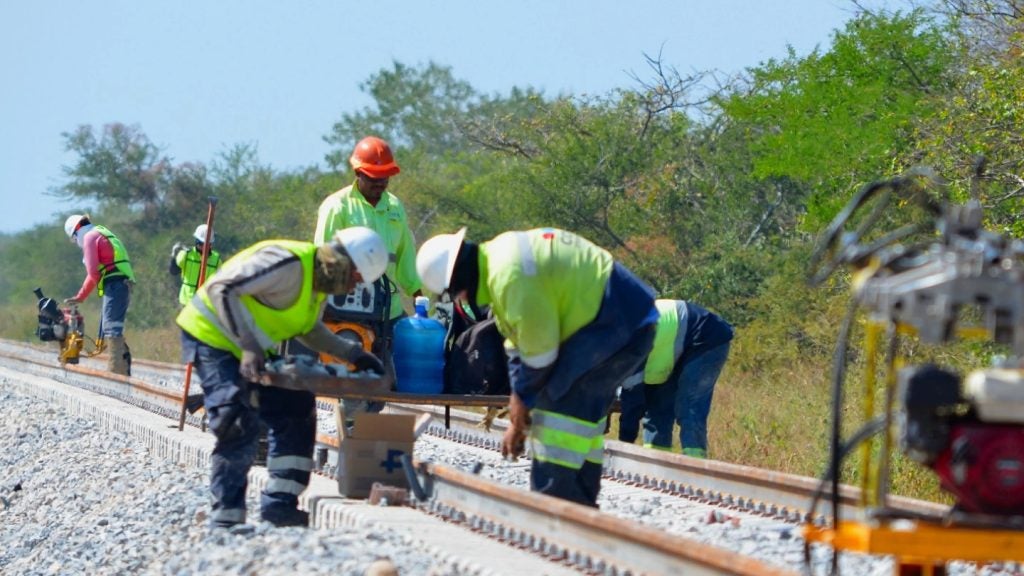
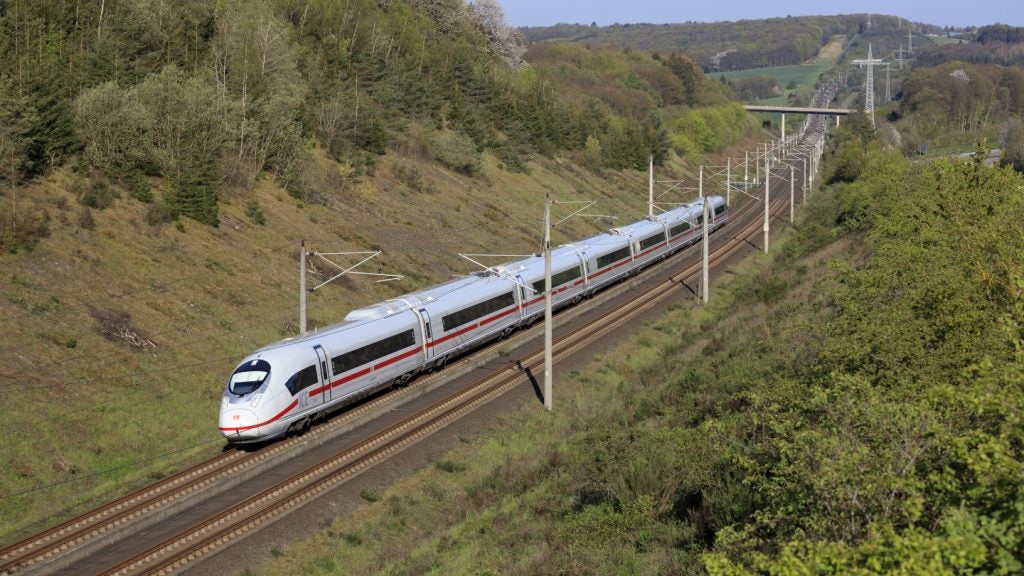
The project also includes the electrification of the existing railway line to enable electric trains to operate on the route instead of diesel trains. The track between Ringsted and Rodby will also be updated to enable freight trains to operate on the route. The existing motorways will also be upgraded to connect with the new tunnel.
Fehmarnbelt immersed tunnel construction
Construction of the Fehmarnbelt Tunnel includes the development of three construction sites at Rødbyhavn, Puttgarden and the blue water construction site between Denmark and Germany. Utility connections were established, and new channels and access roads were also built at the sites. New breakwaters were also constructed near Rødbyhavn, extending the coastline by 500m. Construction of the breakwaters required more than two million tonnes of granite.
Fabrication works for the tunnel elements began at Rødbyhavn in 2020 and in Puttgarden in 2021 while dredging of the tunnel trench began in 2021. The tunnel elements are being fabricated at the work harbours developed in Rødbyhavn and Puttgarden. Each of the tunnel elements is being cast separately, with the whole process taking about nine weeks as a high degree of uniformity and quality in the casting need to be ensured.
The tunnel trench is being dredged from the blue water site by a fleet of special dredging vessels that will dredge 19 million cubic metres of sand, stone and soil. The dredged material will be deposited near Rødbyhavn where it will be used to create new beaches and recreational areas.
The tunnel elements will be fitted with waterproof bulkheads at both ends and towed into the tunnel trench by tugs, immersed and coupled together. Work on the tunnel’s technical and mechanical installations will begin in mid-2029, and each of these systems will be thoroughly tested in the final part of the construction phase.
A tunnel portal is built in both Denmark near Rødbyhavn and Germany near Puttgarden to connect the tunnel’s railway and motorway with the upgraded and newly built roads and railways.
Railway upgrades
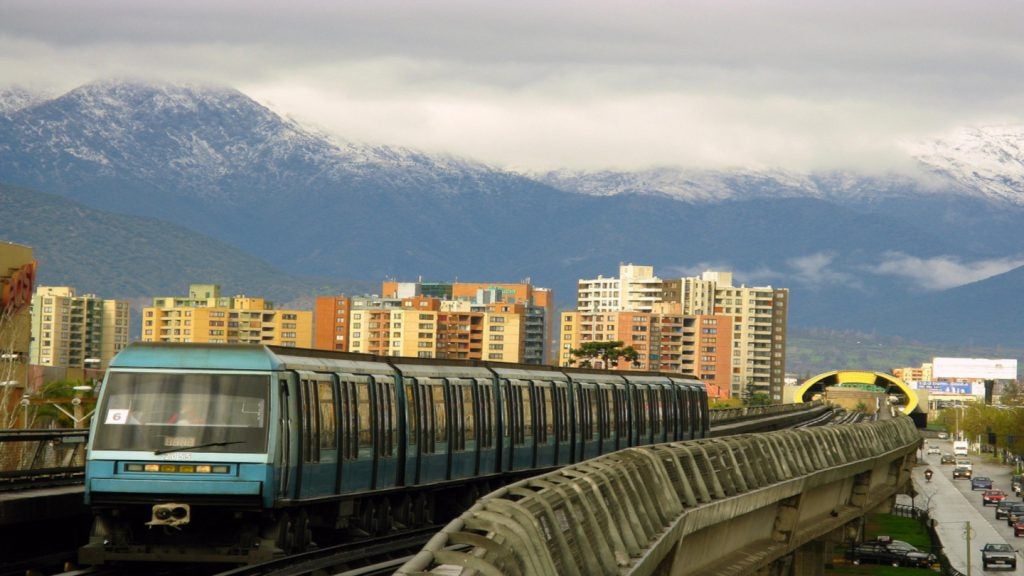
The 115km-long Ringsted-Holeby section of the Ringsted-Femern railway line will be upgraded and electrified, as part of the project. The upgrade will enable trains to operate at speeds of 200km/h from the existing 120/160km/h by straightening out curves. A new alignment will be built towards the north and south of Glumsø, as well as south of Vordingborg and south of Eskilstrup.
A 55km double track section from Vordingborg to Holeby will also be replaced. Furthermore, several stations and platforms on the line will be rebuilt and upgraded to develop new access roads, lifts, and road infrastructure. A new railway bridge will be built over Guldborgsund, in addition to a new double-track bridge over Masnedsund.
The construction works started in 2014, with electrification works expected to be completed in 2024.
Funding for the Fehmarmbelt Tunnel
The project is being completely funded by Denmark, following an intergovernmental agreement signed between Denmark and Germany.
European Investment Bank (EIB) provided a €123.5m ($145.4m) grant from the Connecting Europe Facility (CEF) for the project construction.
The EIB also approved a €200m ($223.1m) loan to Femern Landanlaeg, a construction company and subsidiary of Sund & Bælt, in May 2019 to upgrade the railway network on the Danish side to enable connection with the new tunnel.
Contractors involved
The tunnel is being built by two consortiums called Fehmarn Belt Contractors (FBC) and Fehmarn Link Contractors (FLC). The FBC consortium includes dredging and marine contractors Boskalis and Van Oord, with architecture and engineering consultancy SWECO Denmark serving as the consultant for the consortium.
The FLC consortium includes the construction companies VINCI Construction Grands Projets, Per Aarsleff, Wayss & Freytag Ingenieurbau, Max Bögl Stiftung & Co., CFE, Solétanche-Bachy International, BAM Infra and BAM International, with Dredging International serving as a subcontractor. Engineering and architecture consultancy COWI is serving as the consultant for the consortium.
The Femern Systems Contractors (FSC) consortium is responsible for equipping the tunnel with lighting, ventilation, and safety systems. The consortium includes technology companies Sociedad Ibérica de Construcciones Eléctricas (SICE), SICE Tecnología y Sistemas, Cobra Instalaciones y Servicios, Moncobra. Cobra Instalaciones y Servicios Internacional, SICE Nordics, SICE NZ and SICE PTY are serving as the supporting entities.
Global navigation satellite systems (GNSS) provider AXIO-NET was contracted to supply GNSS for the project.
Construction and civil engineering company MT Hojgaard was awarded the contract to build and expand 52 road and track-bearing bridges, with an option for an additional four bridges, for the Ringsted-Femern railway line.
Banedanmark, a government-owned company responsible for maintaining the railway network in Denmark, is responsible for the design and construction of the new railway facilities.
Consulting companies Ramboll, Tunnel Engineering Consultants (TEC) and Arup are working together to provide design services for the tunnel.
Mibau Stema Group, a building materials company, and SBM Mineral Processing, a concrete supplier, Doka, a producer and supplier of formwork, AFRY, an engineering design and advisory services company, are also involved in the project.
Other contractors include Trelleborg, an engineering company, DMT Marine Equipment, a marine winches supplier; Gouda Geo-Equipment, a supplier of geotechnical equipment; ShibataFenderTeam (SFT), a supplier of fender systems; and Atkins Danmark, a consulting company,